


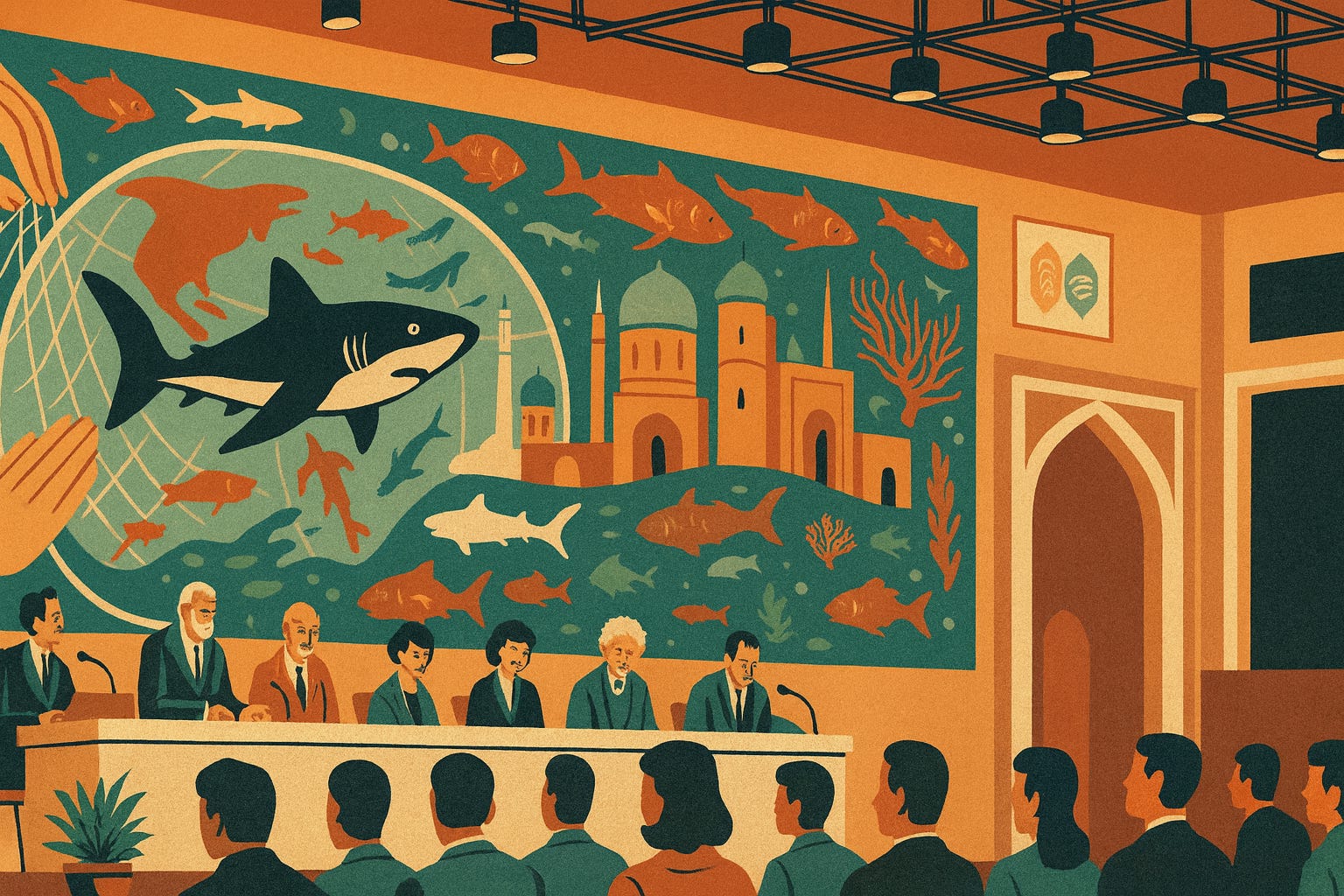
For centuries, Samarkand, in Uzbekistan, was one of the great trading posts of the Silk Road. Spices, textiles, and ideas moved through its markets on their way between continents. Last week, nearly 3,000 delegates gathered in the same city to decide what the world should stop trading altogether.
They were there for CITES, and if you haven’t heard of it, it stands for the Convention on International Trade in Endangered Species of Wild Fauna and Flora. It’s an international agreement between governments, and its purpose is to make sure that trade in wild animals and plants doesn’t drive species to extinction. The agreement covers more than 40,000 species, everything from live animals to fur coats to dried herbs to shark fins. Wildlife trade is worth billions of dollars annually and involves hundreds of millions of specimens. Because that trade crosses borders, no single country can regulate it alone. CITES exists to make 185 governments work together.
The Convention turned 50 this year. It entered into force in 1975, and its 20th Conference of the Parties chose Samarkand to mark the anniversary. Secretary-General Ivonne Higuero opened proceedings by noting the symbolism.
“Samarkand, a city that for centuries stood as a crossroads of cultures, ideas, and trade, is a symbol of connection, dialogue, and cooperation, the very values that define CITES.”
What followed was the most comprehensive set of shark and ray protections the Convention has ever approved. Seven proposals passed. For the first time in history, a shark species has received full protection with a complete ban on international trade

What Was Actually Protected
Let me be specific about what happened, because the details matter.
Four species groups received Appendix I protection, which bans all international commercial trade outright. Oceanic whitetip sharks, once among the most abundant predators in the open ocean, have declined by more than 80 percent. The vote to uplist them passed with 83 percent support: 110 countries in favour, 22 against, 6 abstentions. Panama championed the proposal, with 13 parties speaking in its favour. These sharks are now Critically Endangered and still illegally caught for their fins despite existing protections.
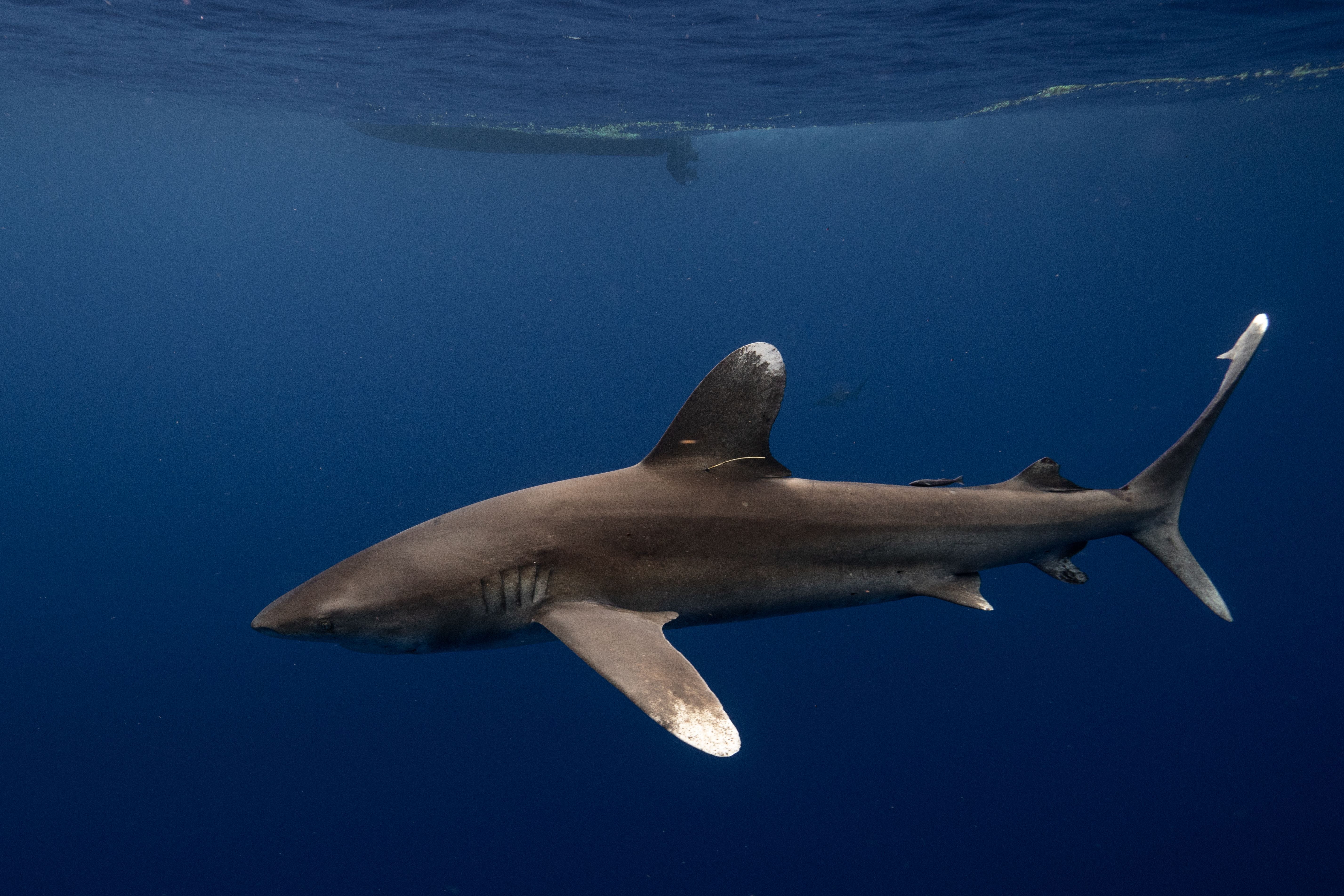
All ten species of manta and devil rays received the same protection. Ecuador led that proposal. These animals are targeted for their gill plates, which are used in traditional Asian medicines despite no evidence of health benefits. In some areas, mobulid populations have collapsed by 90 percent or more under unregulated trade. They reproduce so slowly (one pup every few years, late maturity, slow growth) that populations simply cannot recover from sustained fishing pressure.
Whale sharks, the largest fish on Earth and a cornerstone of marine ecotourism, have declined by approximately 92 percent globally. The Maldives led the push for their Appendix I listing. They’re still caught for fins, oil, and meat.
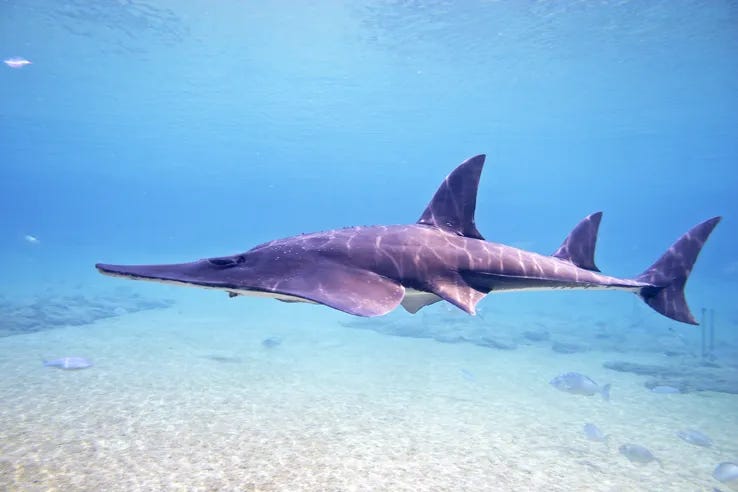
Giant guitarfish and wedgefish, among the most threatened shark and ray families on the planet, will now have zero-export quotas under Appendix II. Benin and Senegal spearheaded these proposals. This effectively halts all international trade in wild-caught specimens until populations can recover. Some of these species have declined by 99 percent.
Tope sharks, smoothhounds, and deep-sea gulper sharks received new Appendix II listings, meaning any trade must now be permitted and proven sustainable. Brazil and the EU co-led the smooth-hound and tope listing. The UK and EU co-sponsored the gulper shark proposal. Gulper sharks are targeted for their liver oil, which contains squalene used in cosmetics and pharmaceuticals. Their populations have fallen by around 80 percent regionally, yet until now this trade was virtually unregulated. Smoothhounds are often marketed under generic labels like “flake,” which has made enforcement nearly impossible.
By the end of CoP20, more than 50 countries had co-sponsored the suite of shark and ray measures. The coalition stretched across Latin America, Africa, the Pacific, and Asia. Countries that rarely agree on anything found common ground here.
Luke Warwick from the Wildlife Conservation Society called it a landmark victory and ‘a watershed moment for all sharks and rays.’ Guy Stevens, CEO of The Manta Trust, described the mobulid uplisting as a turning point, saying that Appendix I protection ‘closes down international trade, reducing demand-driven incentives for overfishing.’ The Wildlife Justice Commission called the oceanic whitetip ban ‘an essential and long-overdue recognition of the scale of illegal trade’ threatening the species.
I don’t write good news very often. The ocean doesn’t give me much to work with. So let me be clear, this matters. Fifty years into the Convention’s existence, countries finally agreed to close the loopholes that have allowed demand for fins, gill plates, meat, and liver oil to drive population collapses across an entire class of animals. Shark and ray products are now treated with the same legal weight as elephant ivory or rhino horn.
I’ve told you the good news. Now here’s what could go wrong.
Why did previous protections fail? What does genetic testing tell us about illegal trade? What has to happen in the next two years for any of this to matter?
Paid subscribers keep reading now. Everyone else: this goes public in two weeks, or you can subscribe today and find out why I’m not celebrating yet.
The Oceanic Whitetip Problem
Oceanic whitetip sharks were already listed on Appendix II. That listing was supposed to mean something. It meant that international trade had to be legal, traceable, and sustainable.
Genetic testing of fins in Hong Kong tells a different story. More than 95 percent of oceanic whitetip fins in that market were unreported and likely illegal. The protections existed. The enforcement did not. A separate study found that four of the five shark species listed under CITES in 2013 were still common in Hong Kong shark-fin markets years later.
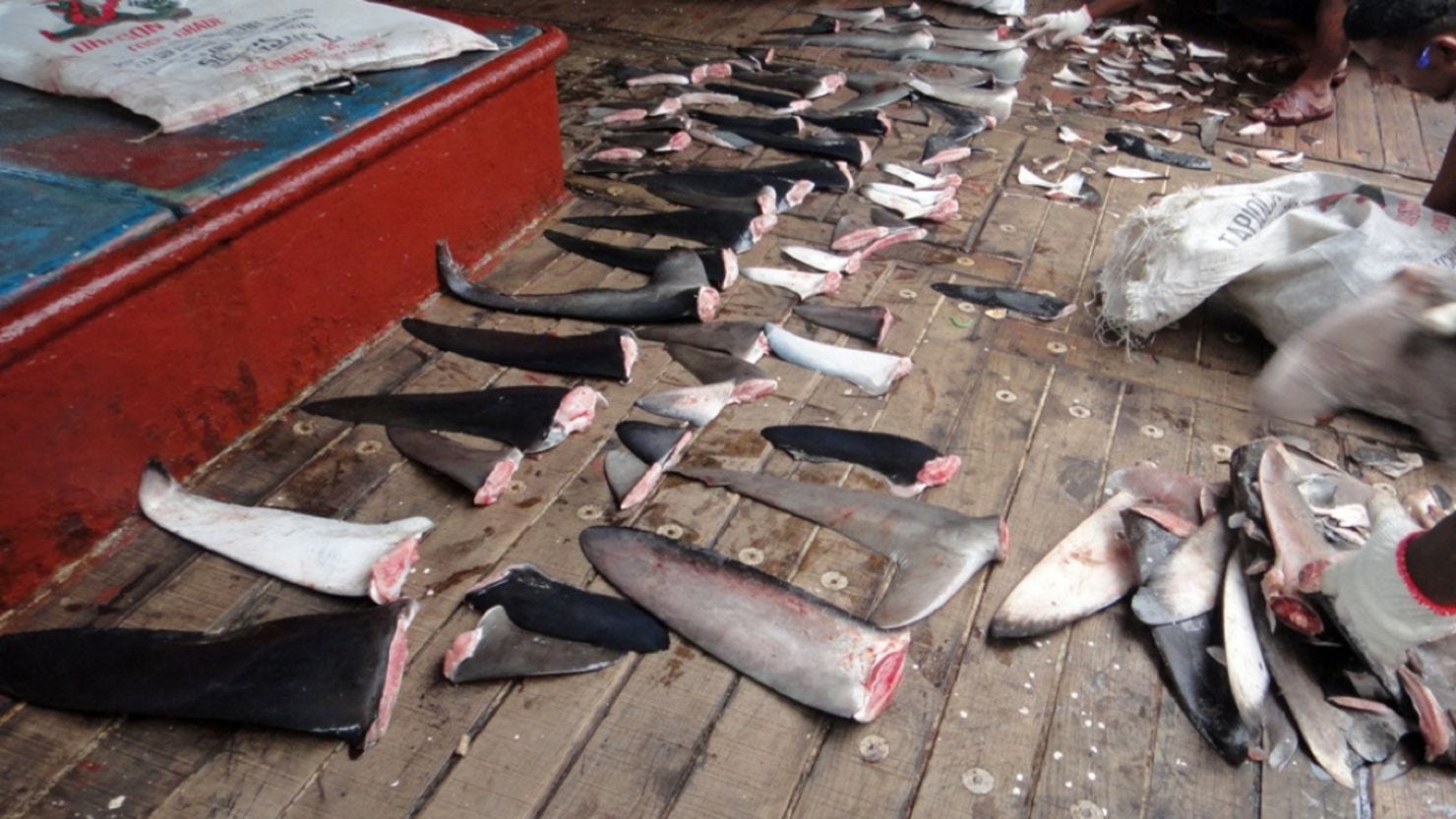
Here’s the thing about CITES, it’s legally binding, but it doesn’t replace national laws. Each country has to pass its own legislation to implement it. Each country has to fund its own customs officers, train its own enforcement teams, and prosecute its own traffickers. The agreement creates the framework. What happens inside that framework depends entirely on political will and resources.
This is the question that worries me… if Appendix II failed so completely for oceanic whitetips, what makes us think Appendix I will work?
The Scale of What We’re Trying to Fix
Some context for why these votes were necessary. More than 100 million sharks are killed every year, either for their fins or caught in nets and fishing lines. Globally, over 37 percent of shark and ray species are threatened with extinction. Sharks and rays are the second most imperiled group of vertebrates on the planet. Pelagic sharks have declined by over 70 percent in half a century. Reef sharks are now functionally extinct on one in five coral reefs surveyed worldwide.
Research from The Manta Trust estimates approximately 265,000 manta and devil rays are caught annually across 92 countries. As IFAW’s Barbara Slee put it: ‘We pose a far greater threat to them...with more than 100 million killed every year.’
These numbers are incompatible with the survival of these species in the wild. CITES remains the only global mechanism capable of regulating international wildlife trade at this scale. If protections were going to come from anywhere, they were going to come from here.
They came. The question now is whether they’ll mean anything.
What Has to Happen Next
The good news is that the tools for implementation already exist. Parties and NGOs have developed visual identification guides, genetic testing protocols, and customs training materials for shark and ray species. All of these will be updated to include the newly listed taxa. Several governments have piloted these tools under earlier shark listings, demonstrating that enforcement is feasible and scalable with proper coordination. Organisations like MarAlliance and Blue Resources have created standardised Non-Detriment Finding templates and electronic tools to help CITES authorities verify that any proposed export is sustainable.
The bad news is that illegal trade is sophisticated and adaptive. Fins are routinely misdeclared or concealed in legal shipments. Illegal catches of requiem sharks continue despite past CITES controls. Many enforcement agencies lack resources, technical capacity, or incentive to police shark products on a broad scale. Without vigilance, illegal finning and black-market trade may simply shift to less conspicuous routes.
CITES does have teeth, the Convention allows Parties to ban imports from non-compliant nations. Countries that fail to submit required permits or monitor trade in the new Appendix II species can face trade sanctions. Whether governments actually commit the resources to do this work will determine if anything changes.
Markets have to be part of the solution. Demand for fins and gill plates persists despite no scientific evidence of health benefits. Squalene from shark liver oil appears in cosmetics when plant-based alternatives exist. If demand continues, illegal trade will adapt. Reducing that demand requires public awareness at a scale we have not yet achieved.
Some of these protections also include delays. The listings for tope sharks, smoothhounds, and gulper sharks have an 18-month implementation period. That’s 18 months of continued unregulated trade while governments get their legislation in order.
Fifty Years to Get Here
The theme of CoP20 was ‘Bridging Nature and People.’ For most of those fifty years, sharks and rays fell through the gap. They were treated as bycatch, as commodities, as acceptable losses. The fin trade operated with minimal oversight. Manta gill plates entered traditional medicine markets without evidence they did anything useful. Species after species declined while the diplomatic machinery moved slowly.
Samarkand was different. The coalition held. The votes passed. Seven proposals for sharks and rays, and every single one went through. It happened because countries that are often at odds found common ground on the value of keeping these animals in the ocean.
It feels fitting that this happened in a city built on trade. For centuries, Samarkand’s markets moved goods across the world. Last week, 185 countries stood in that same place and agreed that some things should not be for sale.
That’s worth something. It may be worth a great deal, depending on what happens next.
The decisions in Samarkand offer genuine hope. They also offer a test. We have agreed that these species matter.
Now we find out if we meant it.
Support Independent Ocean Journalism
This piece today is free to all to read two weeks after release, and is supported entirely by paid subscribers. Their backing allows me to spend the time researching, writing and fact-checking longform stories like this one, and to keep the Voice for the Blue podcast and ocean reporting free for everyone.
If you’d like early access, paid subscribers receive every story two weeks before general release, plus occasional behind-the-scenes updates and extended features. Your support makes independent ocean journalism possible, and helps keep these stories reaching classrooms, communities and readers who can’t afford to pay.
Become a paid subscriber to Ocean Rising today.
Thanks for stopping by.
- Luke
Enforcement is always the issue.