


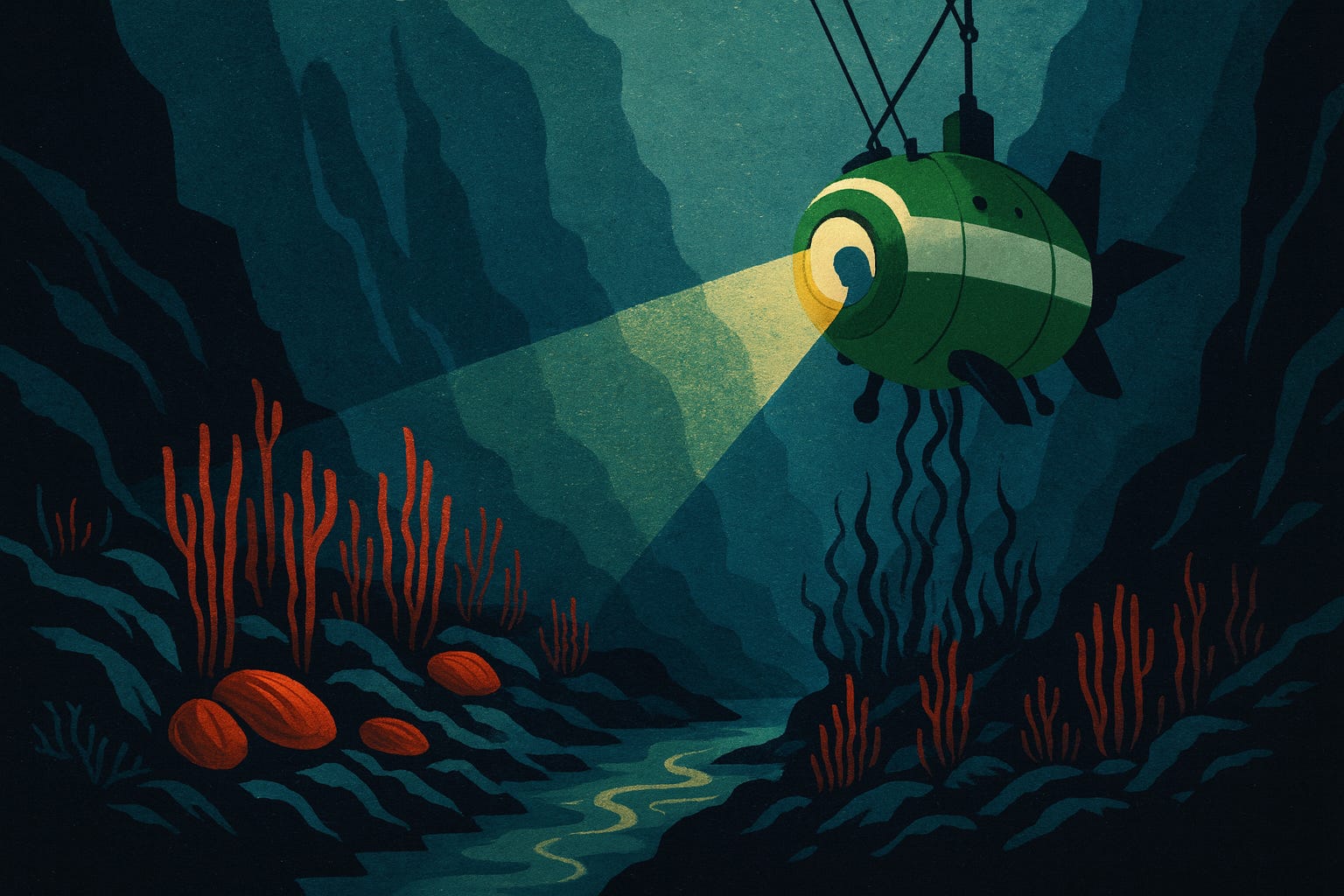
Mengran Du descended to 9,533 metres in the Kuril-Kamchatka Trench and found forests of tubeworms, fields of clams and bustling communities of life powered not by sunlight but by methane seeping from the sea floor. It’s the deepest animal ecosystem ever discovered and it changes everything we thought we knew about the limits of life.
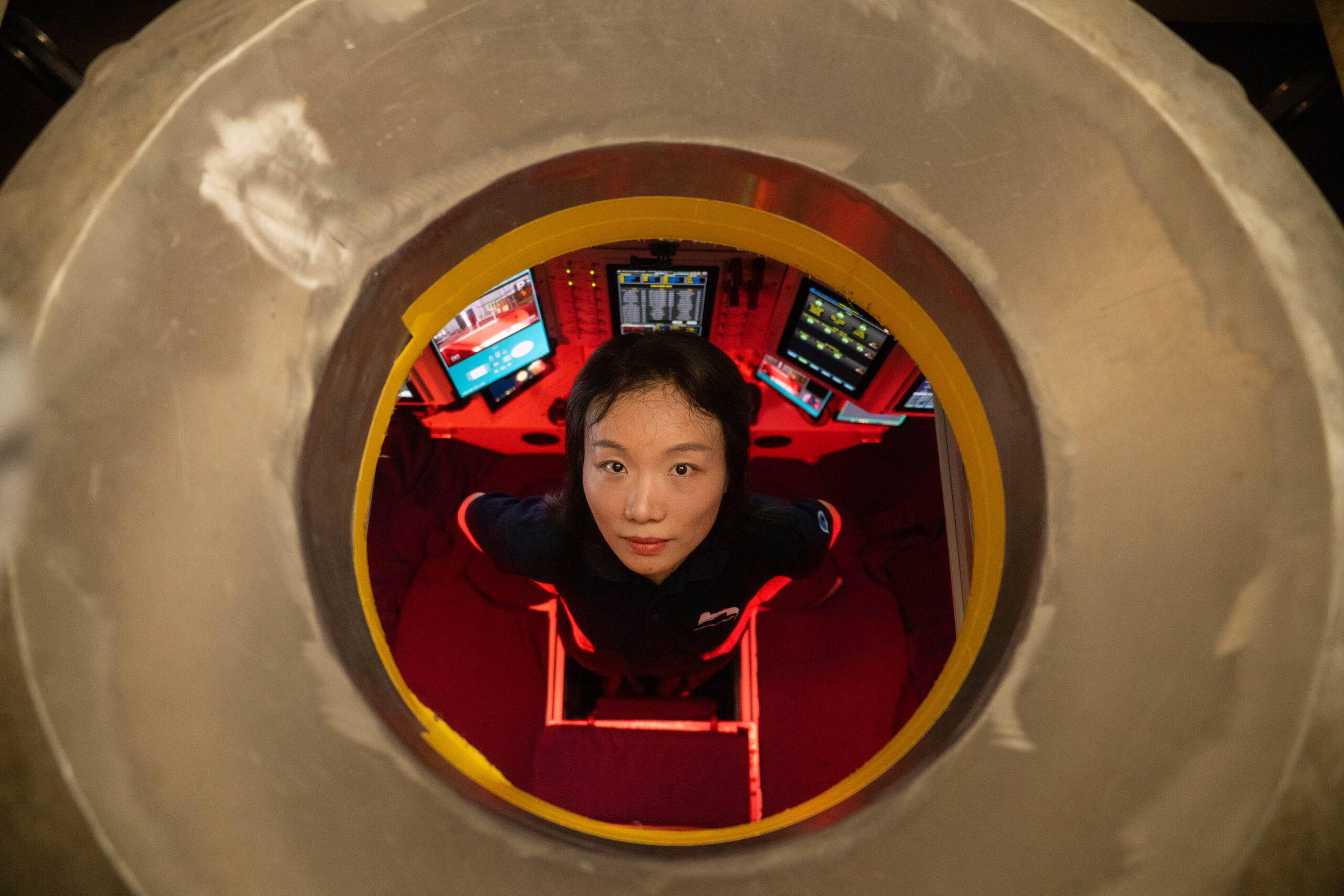
Nine kilometres beneath the surface of the Pacific Ocean, in a titanium sphere barely wider than a double bed, Mengran Du pressed her face to the porthole and watched the impossible unfold.
The submersible’s lights cut through water that had never seen the sun. At this depth, the weight of all that water above creates pressure so intense it would crush a human body instantly. Imagine a thousand atmospheres pressing in from every direction. The temperature hovered just above freezing. No light from above could penetrate here. By every measure of what we thought we knew about life on Earth, this should have been a wasteland.
Instead, Du found herself staring at a garden.
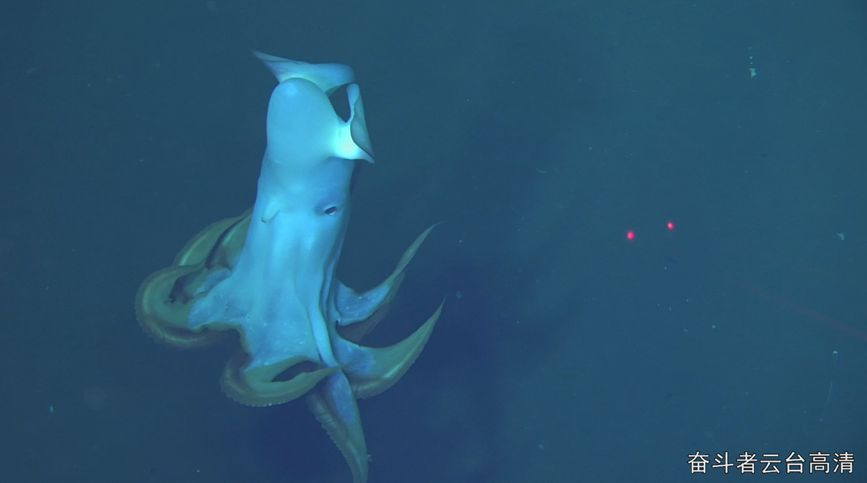
Ghostly white worms, some stretching thirty centimetres long, swam through forests of blood-red tubeworms that carpeted the sea floor in dense, swaying colonies. Clams nestled in black mud. Pale snails the size of her thumbnail clung to the tubes. The whole scene pulsed with activity, with life, with a kind of impossible abundance that shouldn’t exist.
‘To grasp the unknown, you must venture there, experience it, and observe it with your own eyes,’ Du would later say. It’s a philosophy that has defined her career and led her to places few humans have ever witnessed.
Harder Than Space
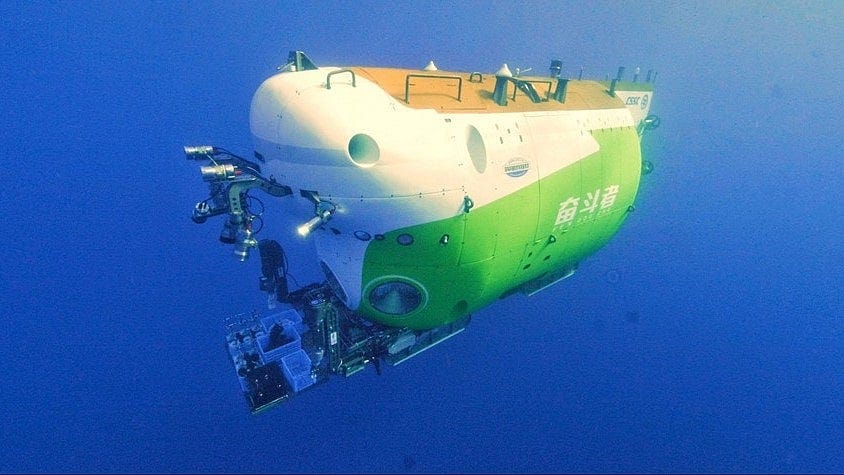
What those eyes saw in the summer of 2024, during an expedition to the Kuril-Kamchatka Trench northeast of Japan, would fundamentally change our understanding of where life can thrive on this planet. Du and her colleagues aboard the Chinese research vessel Tan Suo Yi Hao, piloting the submersible Fendouzhe, had discovered the deepest animal ecosystem ever documented. Published in Nature in July 2025, their findings revealed thriving communities of complex life spanning 2,500 kilometres along the floors of two Pacific trenches, at depths ranging from 5,800 metres to an astonishing 9,533 metres.
To put that in perspective, if you placed Mount Everest at the bottom of this trench, its peak would still be more than half a kilometre underwater.
This wasn’t just deep. This was a depth that, until recently, most scientists assumed would be essentially lifeless. The hadal zone, named after Hades, the Greek god of the underworld, begins at 6,000 metres and represents the ocean’s final frontier. These are the trenches formed where the Earth’s great tectonic plates collide and one slides beneath another, creating the deepest scars on our planet’s surface. We know more about the surface of Mars than we do about these places.
‘Deep-sea exploration is considered even more difficult than space exploration,’ Du told China Daily, ‘due to factors such as high pressure, low visibility, and low temperatures.’
She would know. Du, a geoscientist at the Chinese Academy of Sciences’ Institute of Deep-sea Science and Engineering in Sanya, has spent her career pushing into these hostile depths. Her background studying life in coastal waters gave her an unusual advantage. She could identify species while still on the sea floor, recognising what she was seeing in real time rather than waiting for samples to reach the surface.
‘Mengran has made a great contribution to these expeditions,’ says Xiaotong Peng, deputy director of the Institute and a fellow passenger in the cramped submersible. ‘She has a great passion for deep-sea science, and that is one of the reasons why we can find such amazing phenomena at the sea floor.’
The Deepest
The discovery came during dive FDZ 271, when the team first encountered dense clusters of tubeworms at 9,533 metres. They named the site ‘The Deepest’ with characteristic scientific understatement. Over the following weeks, Du served as chief scientific officer for 24 dives, each lasting an average of six hours, each pressing the submersible and its three-person crew to the absolute limits of human engineering.
What emerged was a map of life that nobody expected. The communities weren’t isolated pockets. They stretched in a continuous zone along the edges of the tectonic plates, where the crumpled sea floor buckles and folds. Site after site revealed the same pattern: dense populations of tubeworms, clams, snails, and free-swimming worms, all thriving in complete darkness under pressures that would destroy any technology we possessed until remarkably recently.
The question, of course, is how. Every ecosystem on Earth depends on energy. For almost all life we know, that energy ultimately traces back to the sun. Plants capture sunlight and turn it into food. Animals eat plants, or eat other animals that ate plants. Even the deep sea was long assumed to run on this solar economy, with dead organic matter drifting down from the sunlit surface like a slow, endless snowfall of nutrients.
The hadal communities Du discovered operate on an entirely different principle. They are powered not by sunlight but by chemistry.
The rest of this article is for paid subscribers. If you’re finding value in Ocean Rising, consider upgrading. Your support keeps this newsletter independent and ad-free, and funds the deeper investigations that I’m working on. For less than the price of a cup of bad-tasting take-away coffee a month, you get the full archive, every article in full on the day of release, bonus podcast episodes and my genuine gratitude.
