


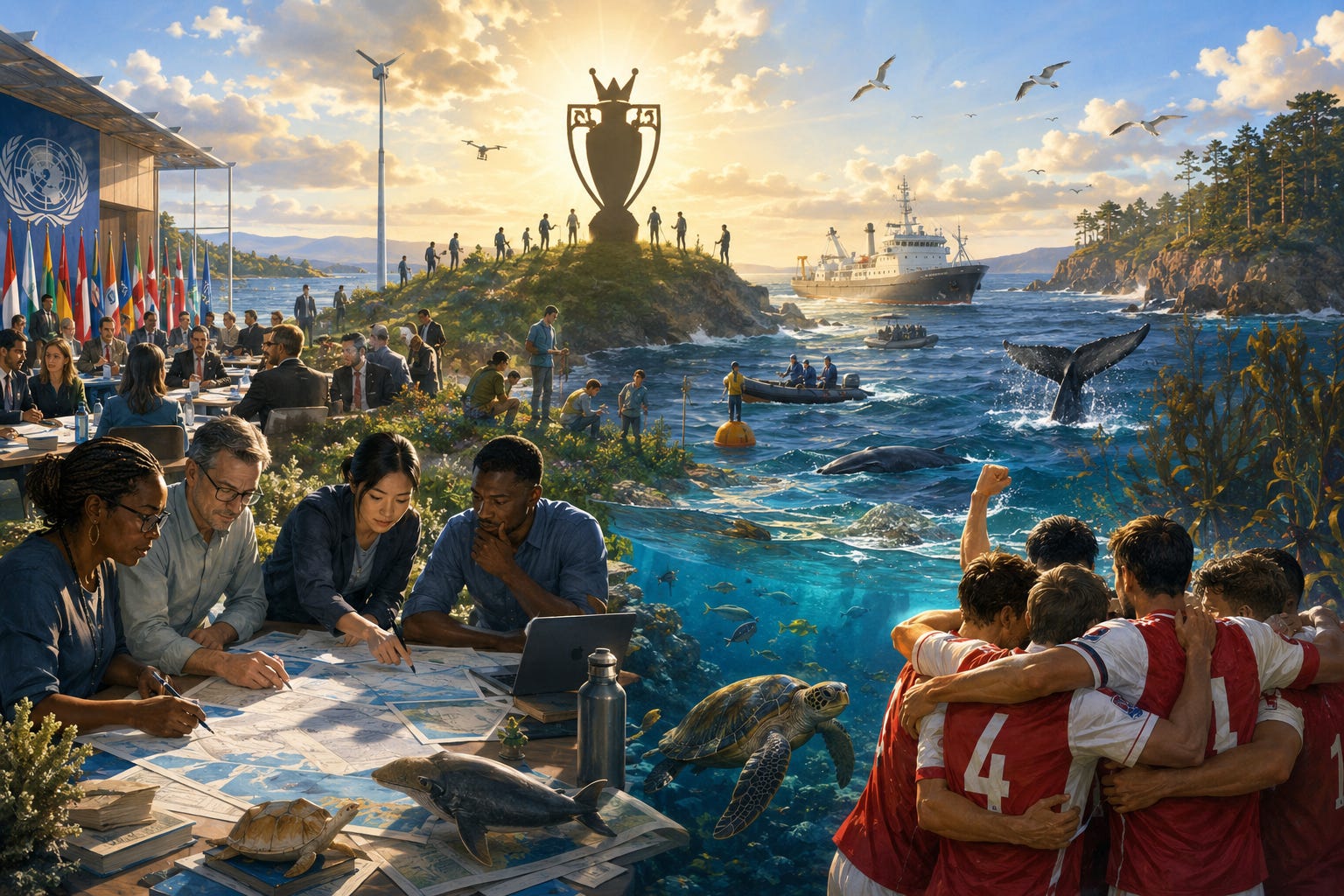
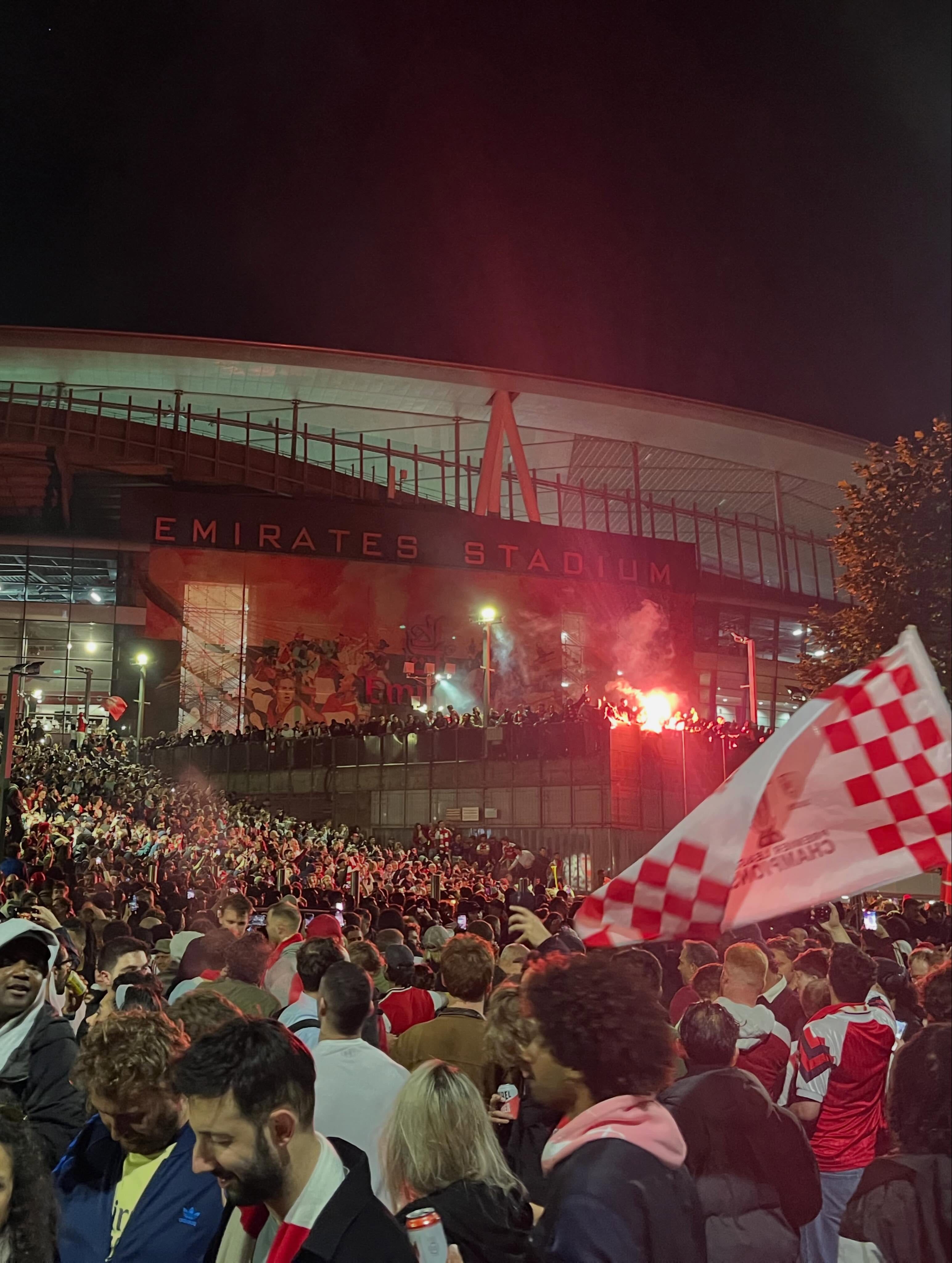
Arsenal won the English Premier League last night, and they weren’t even playing.
They were watching Manchester City draw 1-1 at Bournemouth, and when the whistle went, the title was theirs. Twenty-two years of waiting, confirmed by someone else’s result on a Tuesday night, hundreds of miles from anyone in a red and white shirt.
I’ve been an Arsenal fan for over thirty-five years. Twenty-two of those have been spent waiting for last night. The High Seas Treaty took the same twenty-two years to come into force this January.
So forgive me for noticing it, but it’s also a perfect illustration of how the work I cover actually gets done.
Because the climactic moment isn’t where the work happens. The work happened months earlier, in games that didn’t trend, on nights when the title felt a hundred points away. By the time the trophy arrived, it had already been won.
I keep thinking about this because most of the ocean conservation stories I follow work the same way, and most of us are still waiting for the wrong moment.
The Long Wait for Success
On 17 January 2026, the High Seas Treaty entered into force. The agreement, formally the BBNJ Agreement, provides the first legal framework to protect biodiversity in the two-thirds of the ocean that lies beyond any country’s jurisdiction. It is the biggest expansion of ocean governance in a generation.
Almost nothing happened on the day it became law.
Morocco had ratified the previous September, the sixtieth country to do so, which, under Article 68, triggered a 120-day countdown. The countdown expired on a Saturday. There was no ceremony; the treaty just became binding on the countries that had ratified it.
UN-facilitated talks began in June 2004 with an informal consultative meeting. An Ad Hoc Working Group then spent nine years, between 2006 and 2015, just studying whether a treaty was feasible. A Preparatory Committee took another two years to draft elements of the text. The Intergovernmental Conference that finally negotiated the agreement convened in 2018 and met five times before reaching consensus in June 2023. Then came the slow business of getting sixty countries to ratify, which took another two and a half years.
Twenty-two years from the first talks to entry into force. The same gap that just separated Arsenal from their last title. Nine of those years were spent deciding whether to start.
The story that gets told about BBNJ is the one from June 2023, when delegates applauded the adopted text and the headlines called it historic. That moment got the photographs. But the treaty wasn’t won in June 2023. It was won in 2004, when an informal meeting put the question on the table. It was won in the rooms between 2006 and 2015 where a working group failed to draft anything binding and somebody decided to keep meeting anyway. It was won by Palau being the first to ratify in January 2024, and by every country that ratified in the eighteen months after. By the time the threshold was crossed, the win had already happened.
When BBNJ enters its first Conference of Parties later this year, that meeting will be reported as the moment ocean protection became real. It won’t be. The moment will have happened years earlier, in rooms that nobody photographed.
The Other Tuesday Night Games
Once you start looking, BBNJ isn’t even the exception. It’s the template.
Across ocean governance, dozens of processes are running concurrently, each on its own slow grind, each invisible to almost everyone except the people inside it.
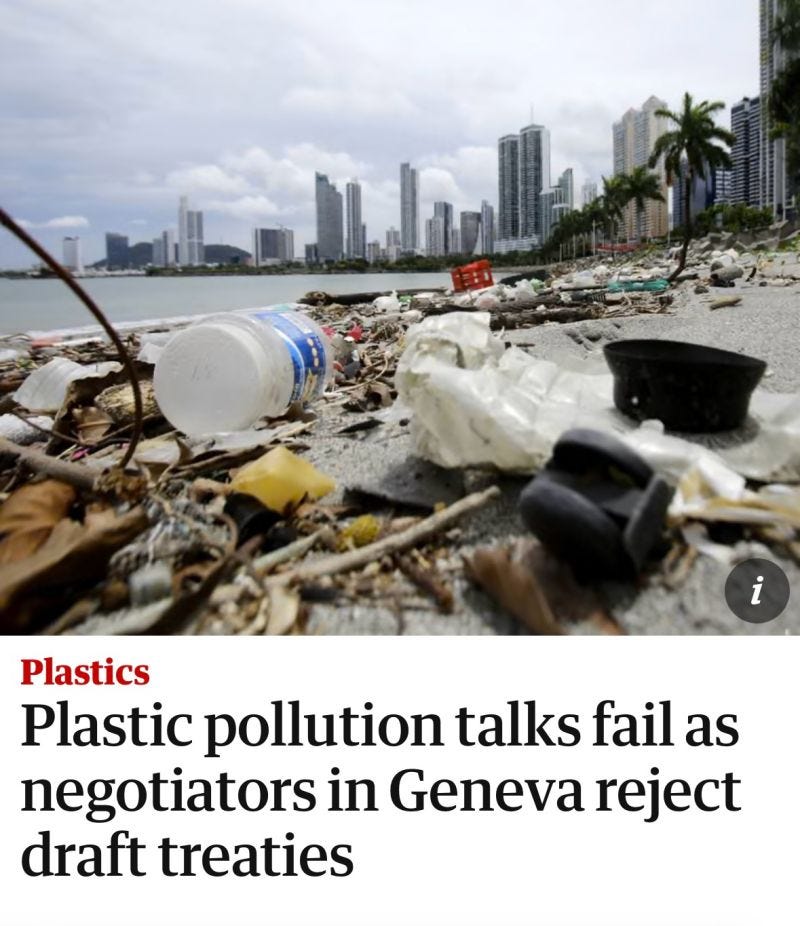
In Geneva last August, the sixth round of formal negotiations for a global plastics treaty broke down. Delegates from 185 countries worked past the deadline into the early hours. The chair resigned. Headlines called it a failure, a missed opportunity, no solution in sight. In February 2026, a new chair was elected. The next round is expected late this year or early next. If you’re sitting inside year three of what is probably a twenty-year negotiation, this looks like a collapse. In twenty years, it will probably look like the unglamorous middle of a process that worked.
In Kingston, in March, the International Seabed Authority concluded another round of negotiations on whether to allow commercial deep-sea mining. Forty nations now support a moratorium or precautionary pause, up from a handful five years ago. No Mining Code was adopted. No mining was approved. The Metals Company, having tried to bypass the ISA entirely by applying directly to the US government under a Trump executive order, is now under investigation by the very body it was trying to sidestep.
The whaling moratorium, agreed in 1982 after years of failed votes at the IWC and thirty-six years after the Commission was founded to manage rather than restrict the industry, has saved most great whale species from the brink. It also hasn’t held cleanly. Japan left the IWC in 2019, added fin whales to its commercial quota in 2024, and set 2026 catch limits at over 400 animals. The work of defending the moratorium is now older than the moratorium itself.
None of these processes will produce a climactic moment that makes the news. Plastics will not be “solved” by a treaty signing. A single vote will not stop deep-sea mining. The whaling moratorium will not be celebrated by anyone outside the room when it survives another challenge. Between them, these processes, and dozens more like them, protect what’s left of the ocean.
The Honest Version of the Lesson
Arsenal finished second in the Premier League in 2022-23. Second again in 2023-24. Second again in 2024-25. Three consecutive runner-up finishes, each one accompanied by the same well-meaning commentary about how this group of players didn't quite have what it took. By April this year, three-quarters through what was looking like a fourth such season, Arsenal lost 2-1 at Manchester City. The title race appeared to be slipping away. At the final whistle, Declan Rice was crouched on the pitch when he looked up at his captain, Martin Ødegaard, who appeared to have lost belief. Rice shook his head and said: "It's not done."
It would have been entirely reasonable, in that moment, to conclude that it was done. The title was out of their hands for the first time since October. The collapse looked plausible.
Arsenal won their next four league games without conceding a goal.
The optimistic story about persistence is that if you keep going, you’ll eventually win. It’s not quite true. The plastics treaty might never be agreed. The deep-sea mining moratorium movement might be overrun by a few states acting unilaterally. The whaling moratorium might be undermined further if more nations follow Japan out of the IWC. Sometimes you keep going, and you still lose.
Keep going wins, because quitting guarantees losing. The work is worth doing whether or not it succeeds. The alternative is to decide that the moment hasn’t arrived, so the moment must not be coming, so the work must not be working. That logic guarantees the loss. Every campaign that ever produced a result was built by people who could have reasonably concluded, ten years in, that it wasn’t going to work.
Most of the people doing this work right now will not be in the room when the result comes. The lawyers drafting the BBNJ text in 2009 did not all live to see Morocco ratify. The IWC delegates who voted in 1982 were mostly not in the rooms in 1972 where the idea first failed. The people sitting in Kingston this March, arguing for a moratorium on deep-sea mining, will not all be there when the question is finally settled.
That, I think, is the actual deal. You do the unglamorous work, year after year, in rooms nobody is reporting from, against opposition that is better-resourced and more patient than you expected. You finish second for as long as it takes. And one Tuesday night, somebody else’s result confirms what your work has already decided.

Years ago, in the early days of manager Mikel Arteta’s tenure, a blacked-out silhouette of the Premier League trophy was installed at Arsenal’s training ground. The players walked past it every morning. The intention was that one day, when Arsenal were champions again, the silhouette would be lit up.
Most of the people doing the work that will protect what’s left of the ocean are walking past their own version of that silhouette right now. The lights aren’t on yet. They might never come on.
The work happens anyway.
What an absolutely inspiring, reinvigorating, and basically legendary article. Here’s to the Arsenal, and here’s to the ongoing worldwide efforts on ocean and environmental conservation. Let’s do this!
What a wonderful confirmation of the tedious, draining, frustrating and often just plain depressing work, tempered once in a while with visible gains, that goes on behind the scenes of this kind of work. But it's also an affirmation that persistence can pay off even after decades of seemingly getting nowhere. Only by looking in the rear view mirror does it all come into focus and a sense of accomplishment makes up for it all. I have been encouraged to see a new generation of dedicated people take their turn to step up to the present challenges. May they continue and have success on the long road ahead of them.