


This article traces a systems-level connection between freshwater use, estuarine health, and marine food webs. It does not claim that a single AI prompt kills a whale. The case is structural: data centres are expanding rapidly, many rely on water-intensive cooling, and water planning lags behind that expansion. Estuaries sit downstream of those decisions. This is not speculation. It is established ecological theory combined with documented policy gaps.
Where figures are uncertain, the text reflects that uncertainty. Readers may disagree about priorities or trade-offs. What is not legitimate is pretending the connections do not exist, or that the absence of precise accounting is proof of harmlessness.
Salt is one of the most well known humpback whales in the ocean. She was first documented in the mid-1970s by researchers at the Provincetown Center for Coastal Studies and has been resighted repeatedly ever since. Long-term whale catalogues describe her as having had around 14 calves, and she became a great-grandmother in 2014. She has survived entanglement in fishing gear. She has survived vessel strikes. She has survived decades of a changing ocean.
She will not survive what comes next if we do not pay attention.
This is not a story about climate change, though climate change is part of it. This is not a story about plastic pollution, though plastic is killing whales. This is a story about water. Specifically, it is a story about the freshwater systems that feed the estuaries that nurture the fish that sustain the whales. It is also a story about what happens when we drain those systems to cool the servers that power artificial intelligence.
What Salt Eats
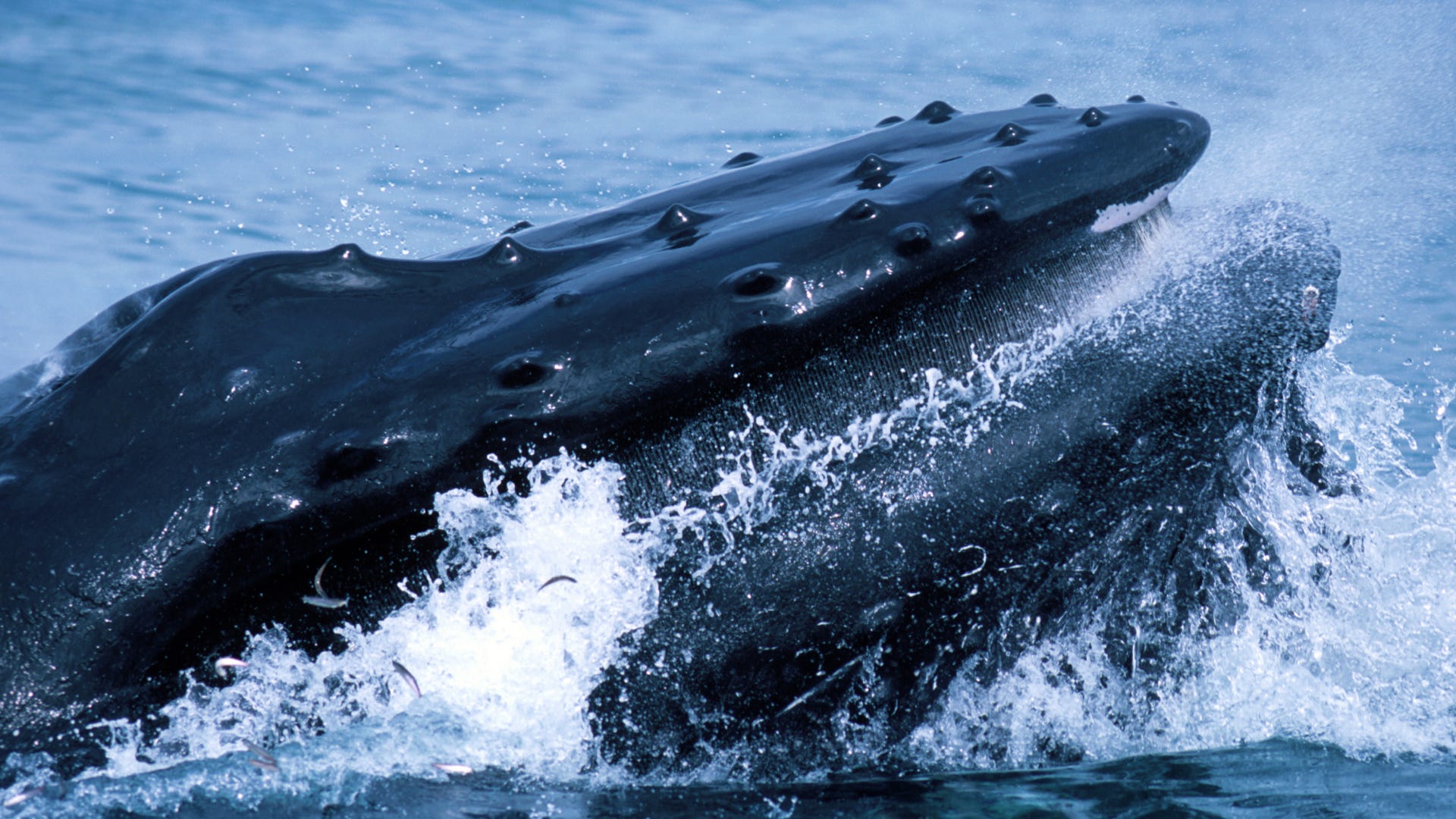
During feeding season, humpback whales can consume large amounts of prey daily, with estimates commonly reaching hundreds of kilograms to around a tonne depending on body size and conditions. They feed on krill and small schooling fish: herring, sprat, sandeels, capelin. Sandeels can form a substantial share of their diet in parts of the North Atlantic. These are not glamorous species. They do not appear on conservation posters. They are the foundation of everything.
Many of the fish that whales eat do not materialise in open water. Critical stages of their life cycles are closely linked to estuaries and coastal nursery habitat. A long-term study of the Thames estuary found seasonal peaks of Atlantic herring and sprat during winter months. In the early 1980s, the Thames hosted hundreds of thousands of these fish. The estuary has its own spring-spawning herring stock, documented by the International Council for the Exploration of the Sea. The Thames is one of only five known UK nursery grounds for Dover sole. It functions as a nursery habitat for over 20 fish species.
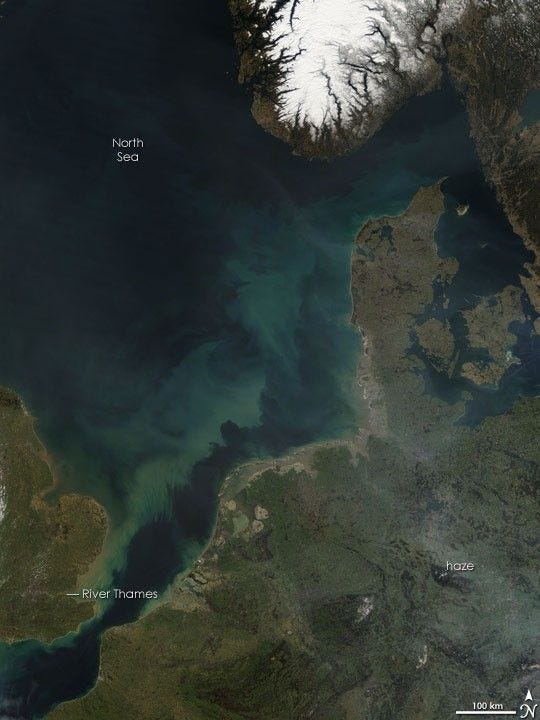
The connection runs deeper than fish migration. The freshwater plume of the River Thames carries nutrients into the southern North Sea. Research published in Estuarine, Coastal and Shelf Science found this plume to be ‘an active region of nutrient and phytoplankton processing and transport.’ Those nutrients fuel spring phytoplankton blooms. Phytoplankton feeds zooplankton. Zooplankton feeds forage fish. Forage fish feeds whales. The river does not end at its mouth. It extends, invisibly, into the waters where whales feed.
Research demonstrates that river plumes can reshape nutrients and plankton in coastal seas. The evidence is there for anyone who cares to look.
What We’re Building
Google has announced major UK data centre investment, including projects in the wider London region. Some of this capacity is planned in areas that drain into the Thames system. The River Lee, which flows directly into the Thames estuary, runs through a Special Protection Area under the EU Birds Directive. It is a Ramsar site, meaning it is recognised internationally as an important wetland. It contains eight Sites of Special Scientific Interest.
Water use varies sharply by design, yet reporting shows some large data centres can use around a million litres a day or more for cooling. The servers that power AI generate enormous heat. Where evaporative cooling is used, most of that water is lost to evaporation. This requires continuous replenishment, often with potable water.
A widely cited estimate, from peer-reviewed research, suggests training GPT-3 in US data centres can evaporate around 700,000 litres of freshwater. Global AI water withdrawal has been projected at 4.2 to 6.6 billion cubic metres by 2027, depending on growth assumptions.
A significant share of planned UK data centre capacity is concentrated in the water-stressed south east. Thames Water has been reported as leaking about 630 million litres a day. Public reporting does not provide reliable figures for how many data centres are supplied or how much water they use.
To maintain supply during drought, Thames Water is consulting on a scheme that would abstract water from the Thames and replace it with highly treated recycled water from Mogden sewage works. The scheme has attracted thousands of objections.
The rest of this investigation, including what happened when the UK government made a decision that changed everything, which companies are playing both sides, and what I've seen in the rooms where these decisions get made, is for paid subscribers.
