


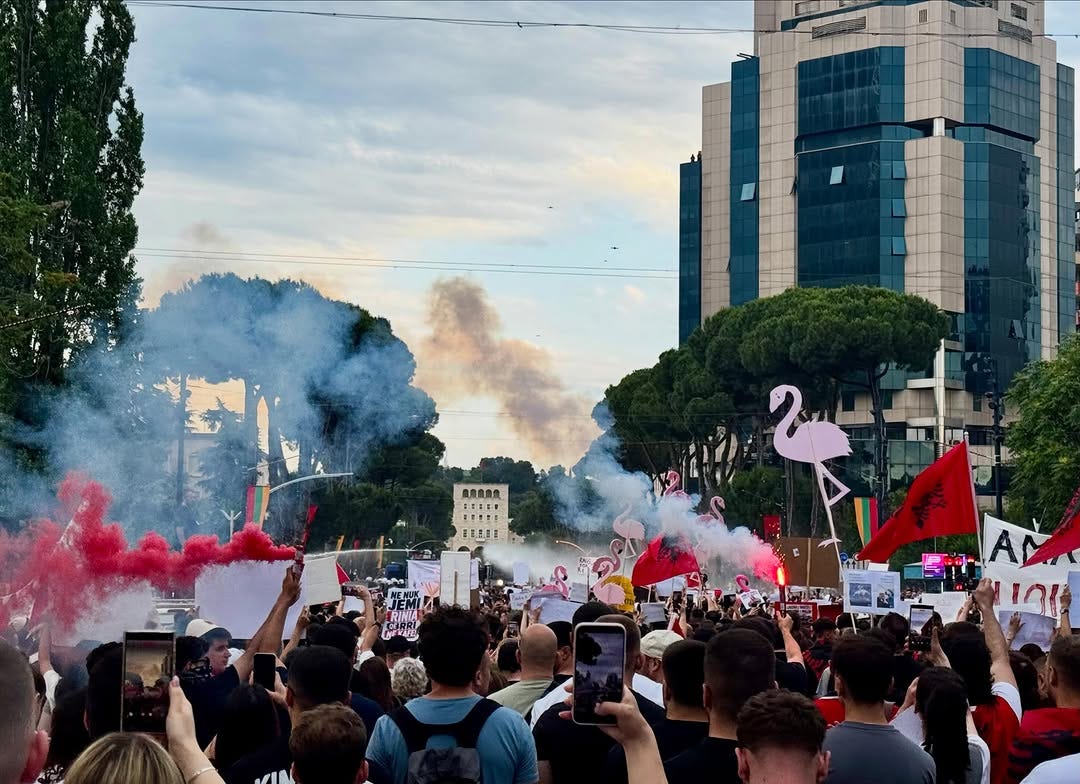
On 30 May 2026, on the dunes near the village of Zvërnec, a man was dragged across the sand by private security guards in black shirts. He had been protesting a fence, barbed wire strung across a public beach inside a protected landscape. A video of it went out across Albanian social media that night, and within days, tens of thousands of people were in the streets of the capital, Tirana, demanding that the government stop.
They were not, mostly, conservationists. They were students, families, and people who had never marched for a wetland in their lives. What had moved them was not the lagoon’s bird count or its place on the Adriatic Flyway. It was simpler and older than that. A piece of coast that belonged to everyone was being fenced off for a resort, and a state-owned island that had been sealed military ground for half a century had been handed to a foreign developer, and nobody had asked them.
The Stakes
The Vjosa-Narta Protected Landscape sits where the Vjosa, one of the last wild rivers in Europe, spreads into a mosaic of lagoon, salt marsh and coastal forest before reaching the Adriatic. Of the 258 river deltas that drain into the Mediterranean, an assessment published in 2024 found that only about four per cent remain relatively undisturbed. This is the largest and most biodiverse of them. More than two thousand three hundred species have been documented across it. The Narta Lagoon alone holds more than twenty thousand wintering waterbirds and ranks among the most important wetlands on the Adriatic Flyway, the corridor along which millions of birds move between Africa and Europe each year.
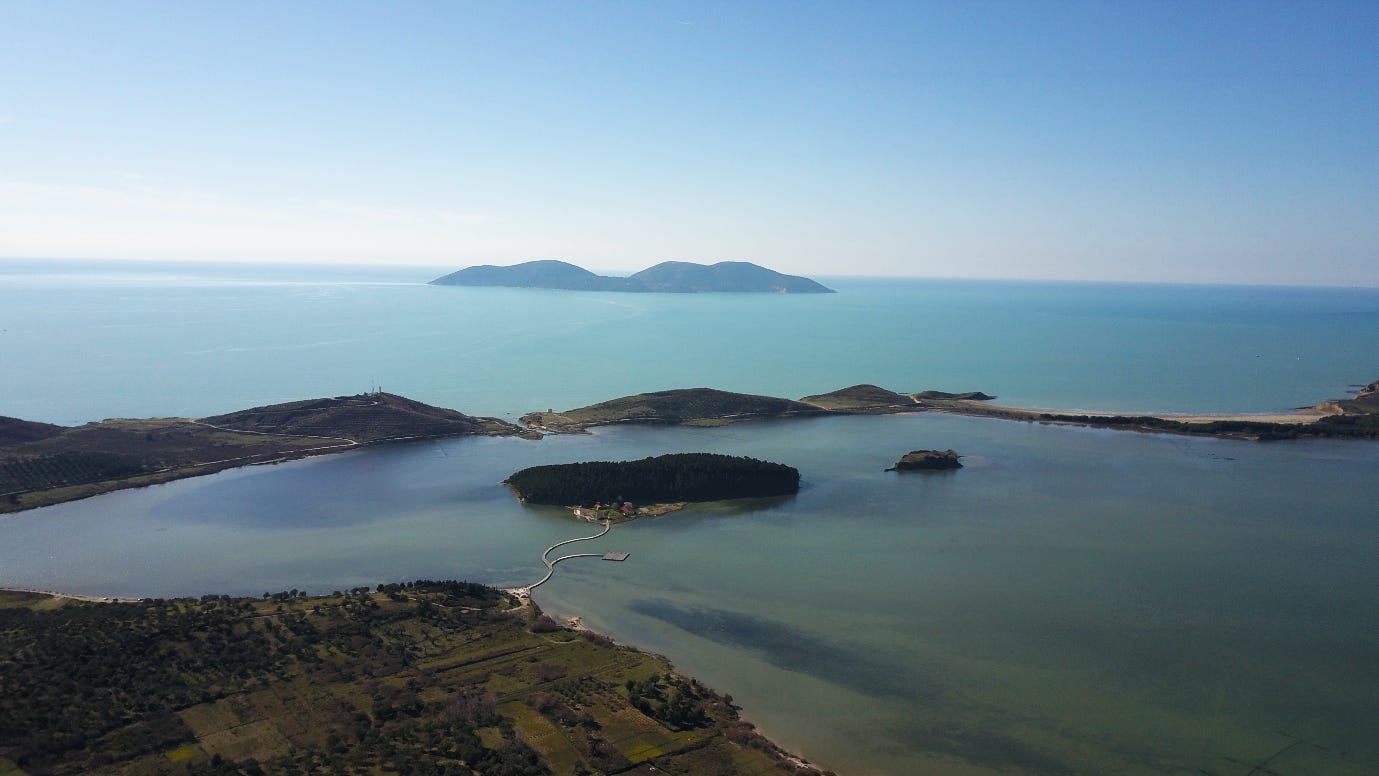
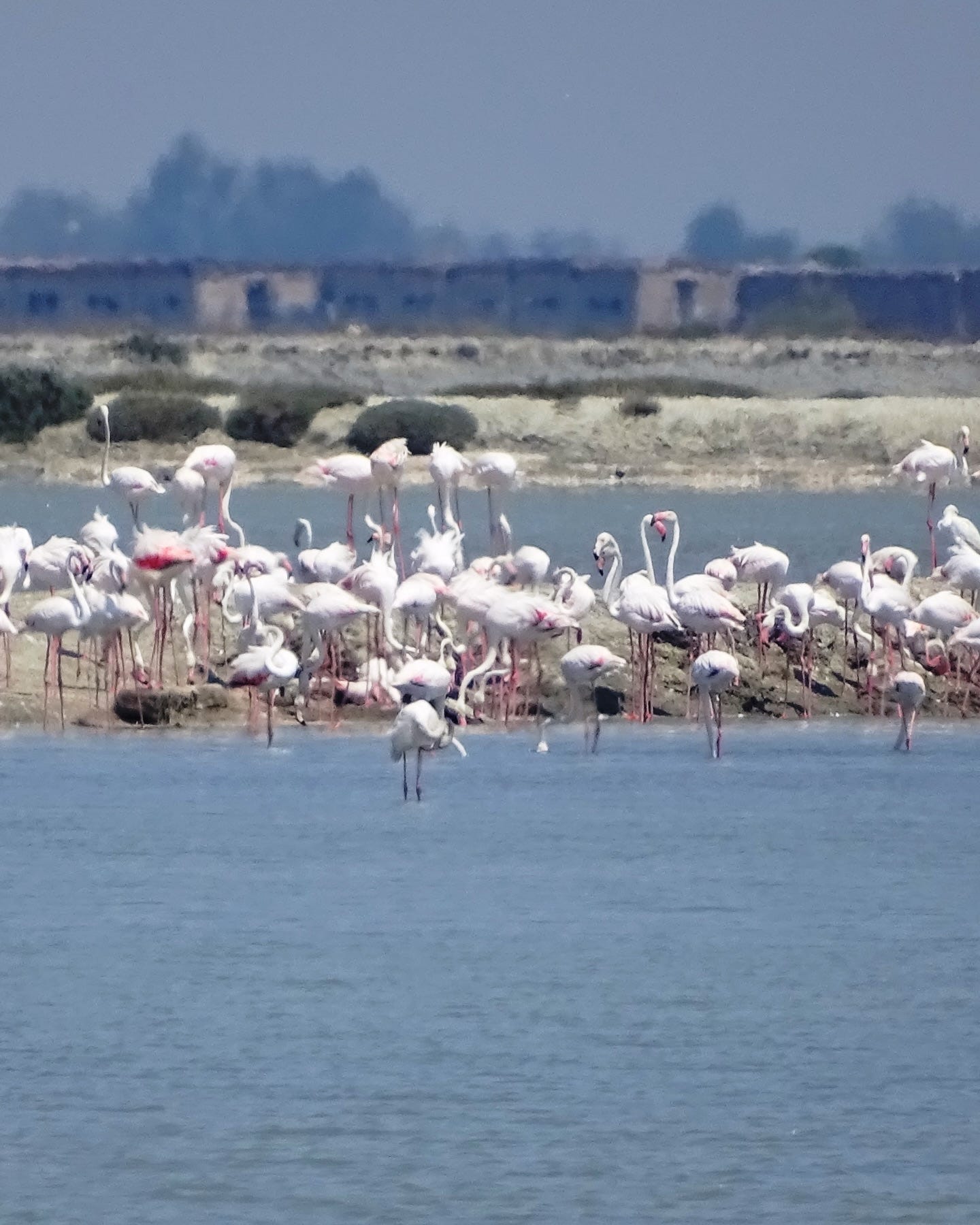
It is Albania’s only flamingo breeding ground. It shelters Dalmatian pelicans, among the rarest large waterbirds in the world. Its dunes are designated natural monuments under Albanian law. Loggerhead turtles, newly arrived on this coast as the sea warms, have begun to nest on its beaches. The waters off the island of Sazan, at the mouth of the bay, hold meadows of seagrass and some of the last refuges in Albania for the Mediterranean monk seal, a species down to fewer than a thousand individuals on the planet.
All of this had been protected, on paper, since 2004.
The Positioning
Most of what has been reported about this coast has been reported as a celebrity story: the Kushner name, the Trump name, the glamour of a billion-euro resort. That framing is not wrong, and the reporting behind it, by the Financial Times and others, has been serious. What it tends to skip is the mechanism. Powerful people always want beautiful places. The question is how every institution built to say no, the protected-area law, the Constitutional Court, the environmental-assessment regime, the public-tender system, came to say yes, or to say nothing, at exactly the moment it mattered.
That sequence is documented in the public record: the laws and the Council of Ministers decisions, the Constitutional Court’s ruling of 31 July 2025, the strategic-investor grant of 30 December 2024, the on-record confirmation of the anti-corruption prosecutor, and the published positions of the European Parliament, the IUCN and the conservation organisations monitoring the site.
