


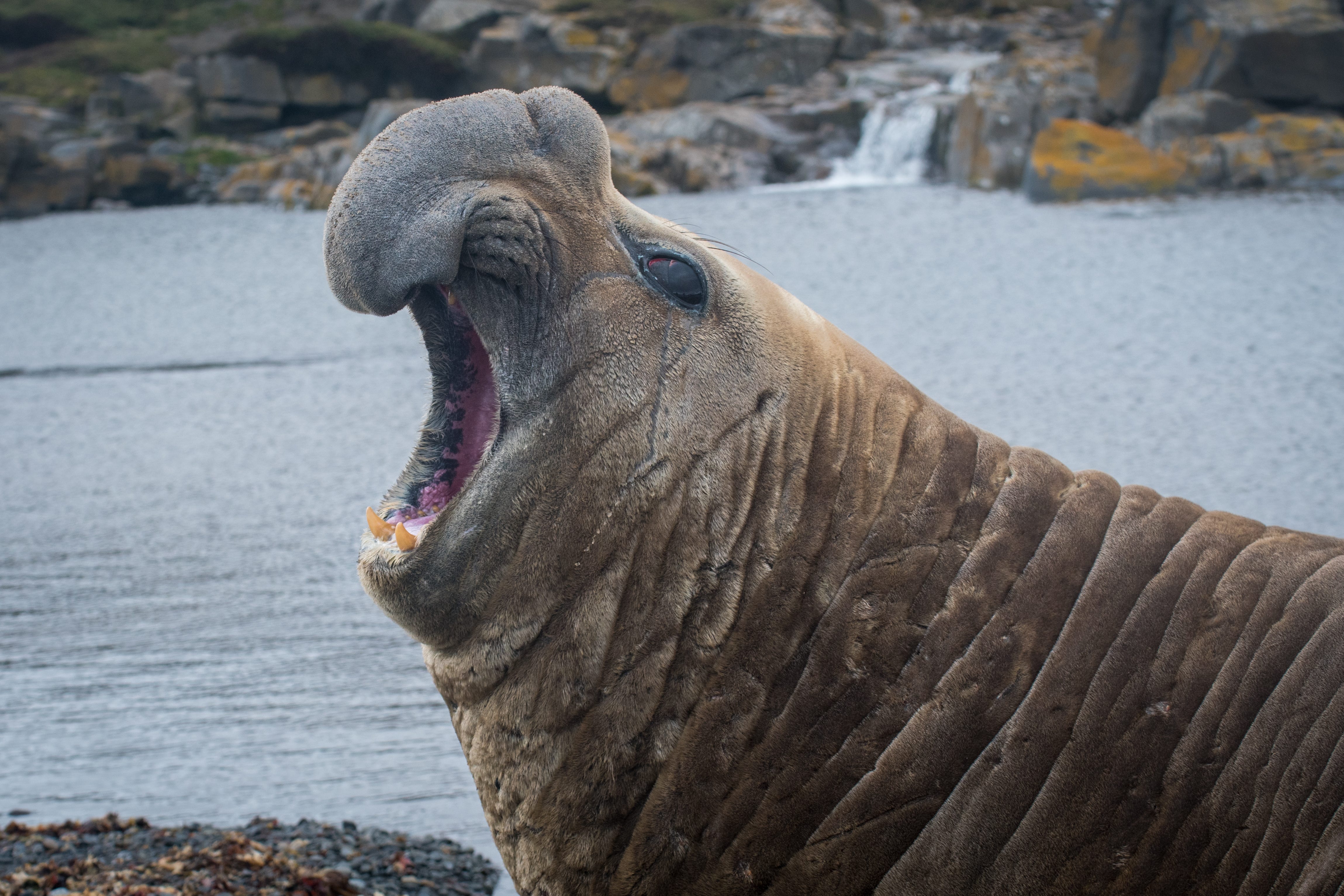
Somewhere south of the Kerguelen Islands, about as far from anywhere as you can get, elephant seals have been quietly doing oceanography for us.
I love stories like this, because an animal can go looking for dinner and, without knowing anything about climate models or how ocean water moves, end up telling us how heat and food move around one of the least visited parts of the planet.
Elsewhere this week, a study found that fish stocks can send a warning sign more than a decade before they collapse, NOAA published a list of proposed changes to American fishing rules that seems to touch almost every place where commercial fishing meets wildlife protection, the Bay of Biscay dolphin closure is back for another winter with a new design, scientists treated bleaching corals with bacteria during a real heatwave, and Jersey has closed more than a fifth of its waters to dredging and bottom trawling.
Deep Dives
Elephant seals have been showing us what happens beneath the Southern Ocean
Southern elephant seals are enormous, a big male can weigh as much as a small car, and they spend most of the year at sea, diving hundreds of metres down after squid and fish in places where sending a research ship regularly would be difficult, expensive and, for long stretches of the year, fairly miserable.
For years, scientists have been fitting some of them with sensors that record how warm and salty the water is as they dive, and a team of researchers has now gone through 133,598 of those dives, made between 2014 and 2020 in the stretch of the Southern Ocean south of Kerguelen, roughly halfway between South Africa and Australia.
The ocean is full of small patches where warmer and colder water meet and start swirling around each other, sometimes across an area one to twenty kilometres wide, and these movements don’t only push water sideways, they also push it up and down, carrying heat and nutrients between the surface and deeper water.
Scientists already knew quite a lot about what happens near the surface because satellites and ships can observe it more easily, but they knew much less about what was happening hundreds of metres down. Especially in winter, when the Southern Ocean is dark, rough and largely empty of research ships.
The seal data changed that, because the same movements were still showing up at least 500 metres below the surface, they were actually stronger down there than in the upper layer of the ocean, and their strength changed during the year too, peaking in the southern spring and falling to its lowest point in autumn.
That matters because the Southern Ocean absorbs huge amounts of heat and carbon dioxide from the atmosphere and helps move nutrients around the world’s oceans, so if more water is moving up and down far below the surface than scientists had realised, they may need to rethink some of their estimates of how heat and nutrients are being moved around.
There’s a limit to what 133,598 seal dives can tell us, because the seals went where elephant seals wanted to go, mainly where they expected to find food, rather than where a scientist designing the perfect experiment might have sent them, and this is still only one part of a very large ocean.
It’s still 133,598 measurements from a place where getting measurements is difficult, collected by animals that were mostly interested in finding squid.
Fish stocks may warn us twelve years before they collapse
Twelve years is the number that stuck out from a study published in Science Advances this week, the average gap between a fish population showing a particular warning sign and that same population later collapsing.
Mathieu Pélissié, Vincent Devictor and Vasilis Dakos at the University of Montpellier, working with Olaf Jensen in the United States, looked at 315 fish stocks from around the world with records stretching back to 1950, and instead of simply asking how many fish were left, they looked at how well each population was producing new fish.
A stock, in this context, just means one population of one species living in one area, so North Sea cod would be one stock, and the researchers had to estimate how well those populations were reproducing using fishing records and scientific surveys.
More than a quarter of the 315 stocks went through a sudden change at some point; more than half of those changes were declines, and stocks that suffered one of those sudden drops were twice as likely to collapse later, with the decline appearing, on average, about 12 years before the collapse.
That’s a long gap, particularly because the researchers also found that these declines were more common in parts of the ocean that had warmed fastest. When they compared warming with other possible explanations, including the type of fish and how heavily it was being caught, warming was the factor most closely linked to the drops.
The study doesn’t give every fishery a 12 year countdown, because it looked at 315 stocks with unusually long records and the warning sign itself has to be estimated from fishing and survey data, rather than something scientists can simply measure by putting an instrument in the water.
Boats can still be bringing in plenty of fish even when the population has already started producing fewer young fish, which means the warning can arrive while everything still looks normal.
NOAA is changing a lot more than one fishing rule
On 2 September, Eugenio Piñeiro Soler, who leads NOAA Fisheries, published a list of the rules and policies his agency intends to change, and what caught my attention wasn’t one single item so much as how many different parts of fisheries management appear once you keep reading.
The first major section says NOAA wants to move faster on removing commercial fishing bans from parts of four huge protected areas in the Pacific, including Papahānaumokuākea near Hawaii and the Mariana Trench, then there’s a rewrite of the speed rules designed to stop ships hitting North Atlantic right whales, a decision not to force lobster boats to switch to fishing gear without fixed vertical ropes, an outside review of the computer models used when deciding how to reduce whale entanglements, and another review of the models used to estimate how often humpback whales are at risk of getting caught in crab fishing gear on the west coast.
Keep reading and you reach rules protecting fish habitat, devices fitted to shrimp nets so turtles can escape, the way endangered species decisions are made, and the checks used on seafood imported into the United States.
That’s a lot of different rules moving at once, and they affect where fishing can happen, how scientists work out the danger to wildlife, what evidence regulators rely on and when those regulators decide fishing needs to be restricted.
The programme is Piñeiro Soler’s plan for carrying out President Trump’s order on Restoring American Seafood Competitiveness, and NOAA hasn’t invented the monument changes on its own, because Trump signed a proclamation on 11 June opening specified parts of the Pacific monuments to commercial fishing, while the Atlantic went first earlier this year, when a February proclamation changed the rules for Northeast Canyons and Seamounts Marine National Monument off New England and NOAA published the final change on 6 April.
Piñeiro Soler and the administration argue that some fishing businesses are dealing with rules that cost them money without delivering enough benefit, and that better science and newer technology can protect marine life without closing as much ocean to fishing. While the Western Pacific Regional Fishery Management Council had already recommended reopening some areas to commercial fishing before the June proclamation, following around 70 written and spoken public comments.
I can see the argument, particularly if a rule is genuinely outdated or based on science that has since improved, although the stakes feel rather different when you apply that logic to an animal such as the North Atlantic right whale.
The latest population estimate is 384 animals, and getting tangled in fishing gear and being hit by ships remain the two major human caused threats to the species. Decisions about ship speeds, fishing ropes and the computer models used to judge risk are being made while there are still fewer than 400 of these whales alive.
Quick Hits
The Bay of Biscay dolphin closure is back, with a twist
Five EU countries want the winter fishing closure in the Bay of Biscay, (designed to reduce common dolphin deaths in fishing gear) to run again in 2027, although this time the boats affected wouldn’t all stop fishing at once, because each vessel over eight metres would choose its own 30 consecutive days between 15 January and 27 February and tell the authorities by 8 January.
PELAGIS, the French research centre that monitors dead dolphins found on beaches, estimates around 1,900 common dolphins died after being accidentally caught in fishing gear during winter 2024 to 2025. This is compared with a revised average of roughly 4,700 per winter before the closures began, although nobody counted those dolphins directly because the figures are worked out from the bodies that reach shore and computer models estimating where dead dolphins are likely to drift.
The older figures have now been recalculated using the same method, which makes the comparison between the two periods more useful, and next winter should tell us whether allowing different boats to stop fishing at different times changes the result.
Scientists gave bleaching corals probiotics during a real heatwave
During a Red Sea heatwave in summer 2022, researchers at King Abdullah University of Science and Technology treated corals that were already bleaching with two mixtures of living bacteria thought to be helpful, as well as versions of those same mixtures where the bacteria had been killed by heat, to see whether changing the bacteria living on the coral could help it survive extreme temperatures.
After 15 days, both live treatments and one of the heat-killed treatments helped the tiny algae living inside the coral keep using sunlight to produce energy, while one live treatment and one heat-killed version also improved the researchers’ wider measure of the coral’s condition.
This is one coral species, at one site, over one fortnight, and treating individual corals by hand is a very long way from doing anything useful across an entire reef. Although it does show that researchers can test the idea on corals going through a real marine heatwave rather than only inside a laboratory.
Jersey has closed more than a fifth of its waters to trawling and dredging
On 1 September, new rules came into force around Jersey, increasing the share of the island’s waters where dredging and bottom trawling are banned from 6.5 per cent to 21.7 per cent, with the new areas covering habitats including seagrass, kelp and maerl beds, which are formed by slow-growing pink algae on the seabed.
Marine protected area percentages can be slightly deceptive because drawing a boundary around a piece of ocean doesn’t tell you very much about what people are actually allowed to do inside it. Whereas in Jersey the change is much easier to understand, because boats can no longer drag dredges or trawl nets across the seabed in those areas.
The restrictions followed three years of work involving Jersey and French fishing representatives and other groups using or trying to protect the sea.
Hard Truth From The Sea
A lot of decisions about the ocean have to be made before scientists have perfect answers, and that can mean acting while the numbers are still uncertain, whether that’s spotting trouble in a fish population years before it collapses, estimating how many dolphins died offshore from the bodies that reach the beach, or deciding how much danger fishing gear creates for a whale.
South of Kerguelen, 133,598 elephant seal dives have just made one small part of that uncertainty a little smaller.
Paid subscriptions fund Ocean Rising’s reporting and help me keep The Deep Brief free for everyone, so if you found this useful, please send it to someone who might enjoy it too.
See you next week.
Luke
Which of these stories would you most like me to investigate properly: NOAA’s fisheries changes, the early warning signs in fish populations, or what elephant seals are revealing beneath the Southern Ocean?