



NOAA claims 85% compliance with whale speed limits; independent analysis of the same satellite data shows 84% non-compliance. Both figures are technically correct; the difference is methodology, and it explains how agencies hide failure in plain sight. Three right whales died from vessel strikes in 2024, all during the season when protections were active. One calf survived for months with its wounds before dying. I contacted NOAA directly with four questions. Their full response, and what they refused to answer, is published here for the first time. The tactics used on right whales are the same ones governments worldwide use to manage the appearance of environmental protection while ecosystems collapse.
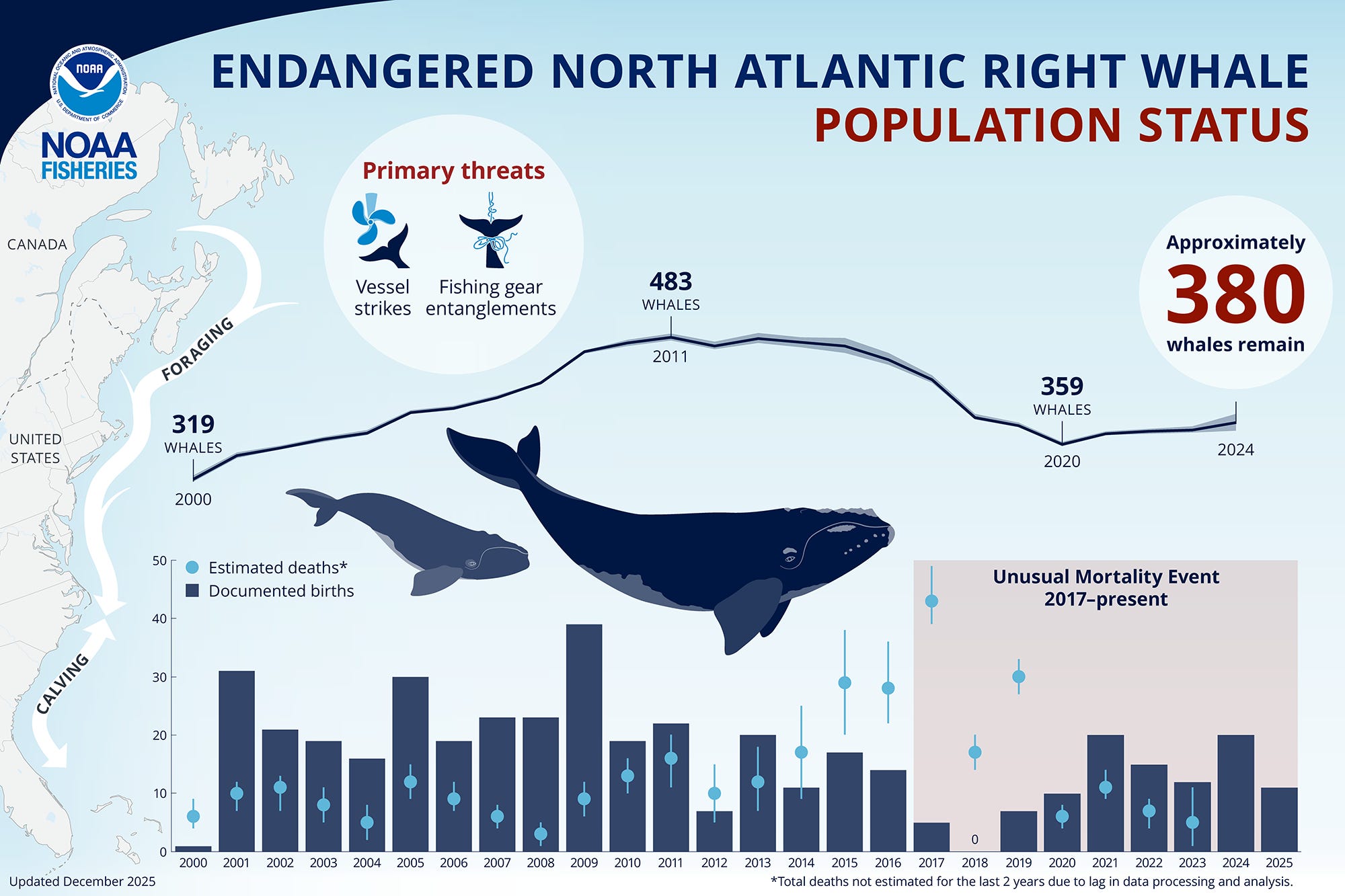
Seventy breeding females. That is what remains of the North Atlantic right whale’s reproductive future. Seventy individuals capable of producing the next generation of a species that once numbered in the tens of thousands.
When a population falls this low, every death matters. Every policy decision matters.
In January 2025, the U.S. National Oceanic and Atmospheric Administration (NOAA) withdrew its proposed amendments to vessel speed regulations designed to protect these whales. The rule change, years in development, would have expanded protected zones and required smaller vessels to slow down in whale habitat. After receiving 90,000 public comments and conducting extensive scientific analysis, NOAA walked away.
I wanted to understand why. So I wrote to them.
I asked four questions.
What measures have you implemented to improve compliance?
What is your timeline for reintroducing protections?
Do you consider voluntary measures sufficient given that three whales died from vessel strikes in 2024?
How do you respond to criticism that you have prioritised shipping interests over species survival?
Unfortunately, NOAA didn’t directly respond any of them.
They are ‘continuing to work closely with our partners and stakeholders,’ they wrote, using ‘existing management measures and technological innovation and partnerships’ to protect whales.
Partners and stakeholders. The same recreational boating industry that lobbied to delay the rule is a partner. The same sport fishing and yacht manufacturing interests that pushed for exemptions are stakeholders. The large shipping companies, notably, were not the primary source of opposition.
At a 2024 North Atlantic right whale vessel strike risk reduction technology workshop, representatives from the World Shipping Council stated that they were not opposing mandatory slowdowns in principle, but wanted clarity and advance notice so voyages planned years in advance could be adjusted accordingly.
The strongest opposition instead came from faster, smaller, privately owned vessels.
They also sent me compliance statistics.
‘For the 2024-2025 season, more than 85% of regulated vessel traffic in these areas complied with the mandatory 10-knot speed restriction.’
Eighty-five per cent. It sounds reassuring. It is not.

The Inversion
Oceana, the marine conservation organisation, has been tracking vessel speeds in whale protection zones using the same satellite data NOAA uses. Their findings tell a different story.
Between November 2020 and July 2022, 84% of vessels exceeded the 10-knot speed limit in mandatory Seasonal Management Areas. Not 15%. Eighty-four.
In the waters off New York and New Jersey, over 70% of vessels exceeded the limit. In the Southeast calving grounds, where mothers nurse newborns, the figure was higher still. In every single protected zone, vessels were recorded travelling at over 30 knots. Three times the legal limit. In areas where pregnant females and their calves swim slowly near the surface.
How can NOAA claim 85% compliance while independent analysis shows 84% non-compliance?
The answer is methodology.