


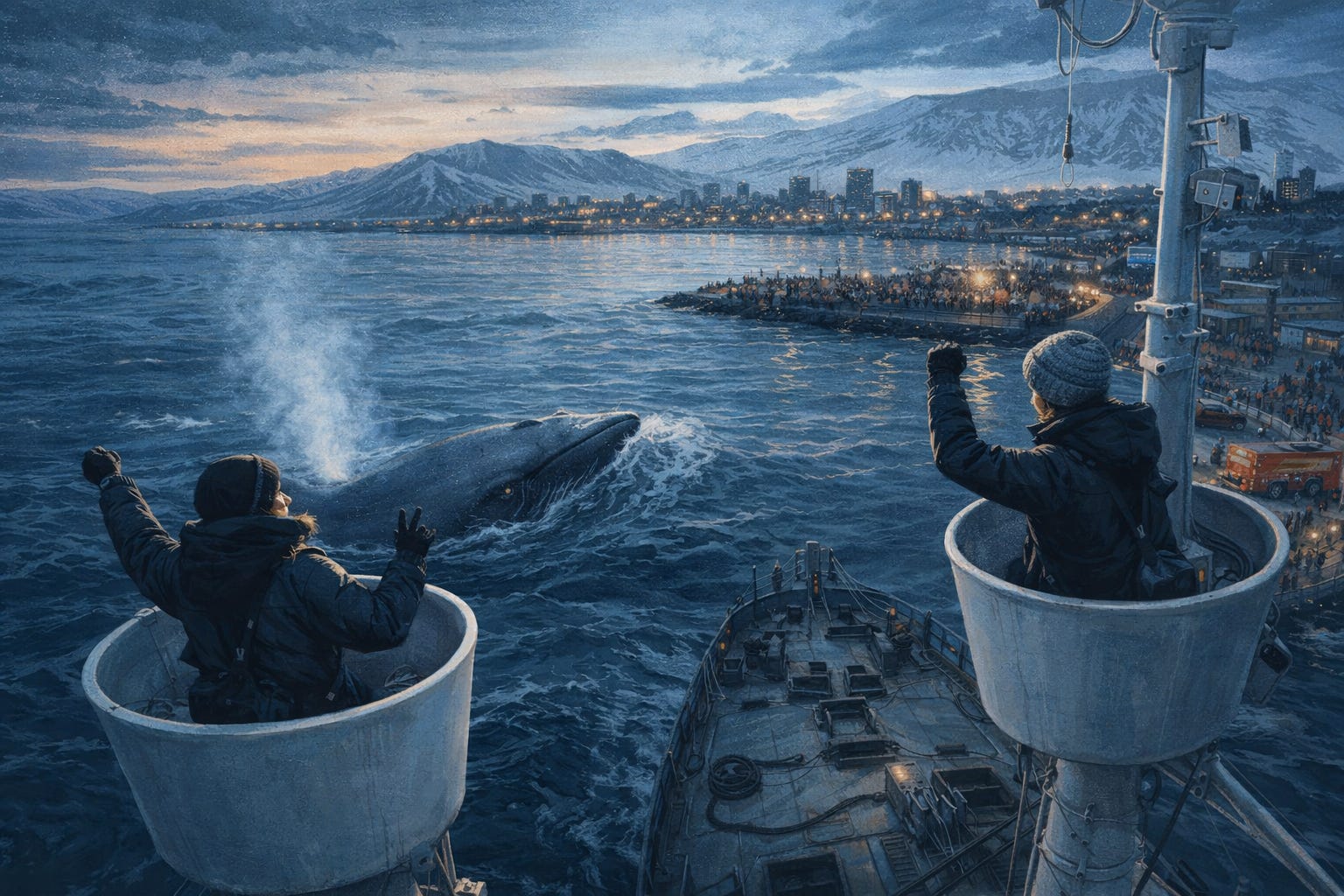
The fin whale surfaced about forty metres from the boat, and for a moment nobody spoke. You forget how large they are until one rises beside you. Twenty metres, maybe more. The spray from the blowhole hung in the cold air. Then the back arched, the dorsal fin broke the surface, and the whale slid under again, descending into water so dark it looked like ink.
I was off the coast of Iceland, on a whale watching vessel out of Reykjavik. The tourists around me reached for cameras. I just watched. I had seen what happens to these animals when the Hvalur fleet finds them. Watching this one breathe and dive, I understood what everyone was fighting for.
The Climb
The steps were slippery and wet in the dark. Anahita Babaei climbed anyway, repeating the same words to herself with each rung: Even one whale. Even one whale.
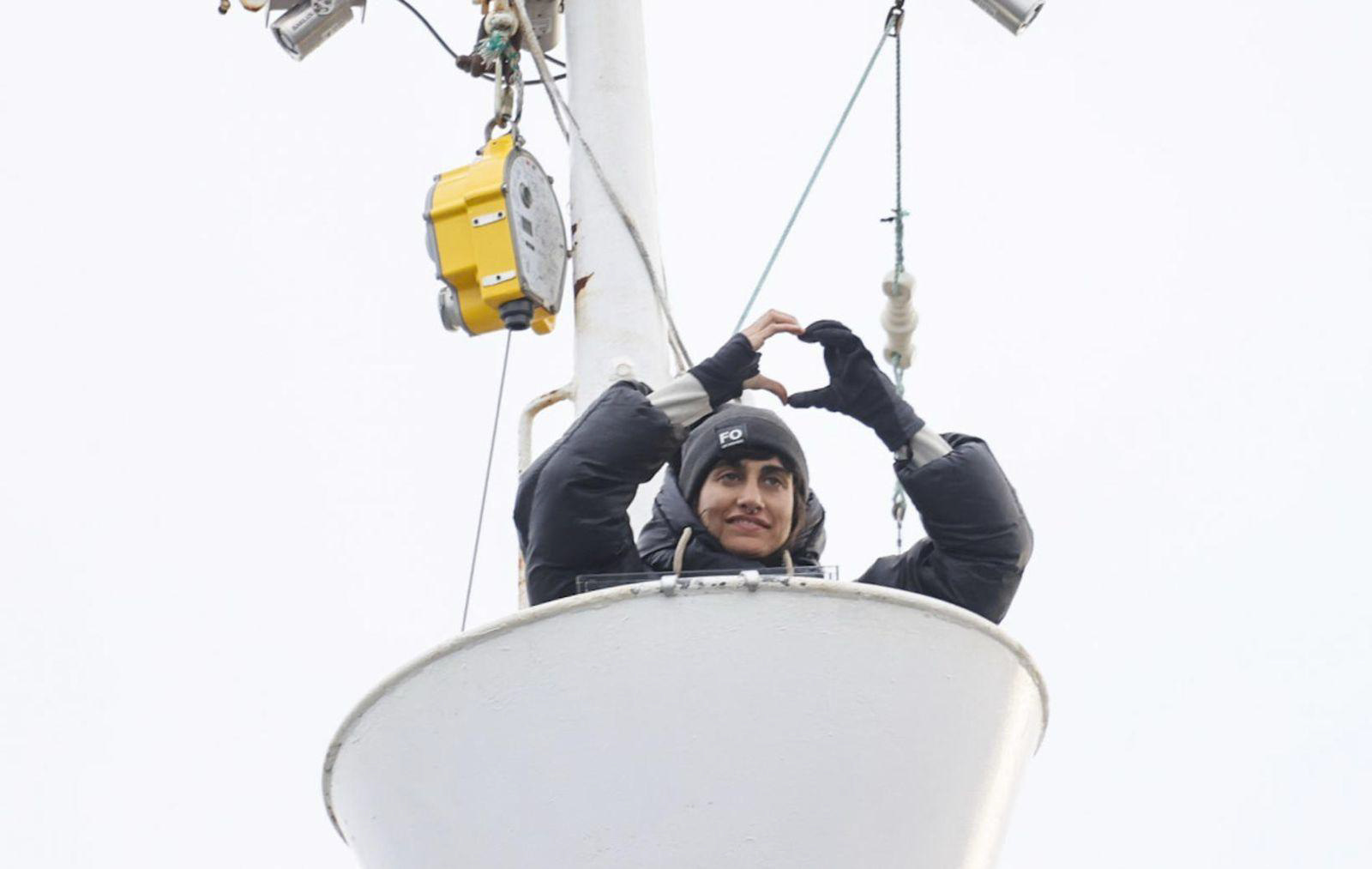
Beside her, on a separate mast, Elissa Phillips was climbing too. She would later say she has no memory of the ascent itself. What she remembers is what came before: the two of them walking silently through Reykjavik harbour in the early hours of a September morning in 2023, holding hands in the darkness. Phillips had been afraid of heights before that night. She isn’t anymore.
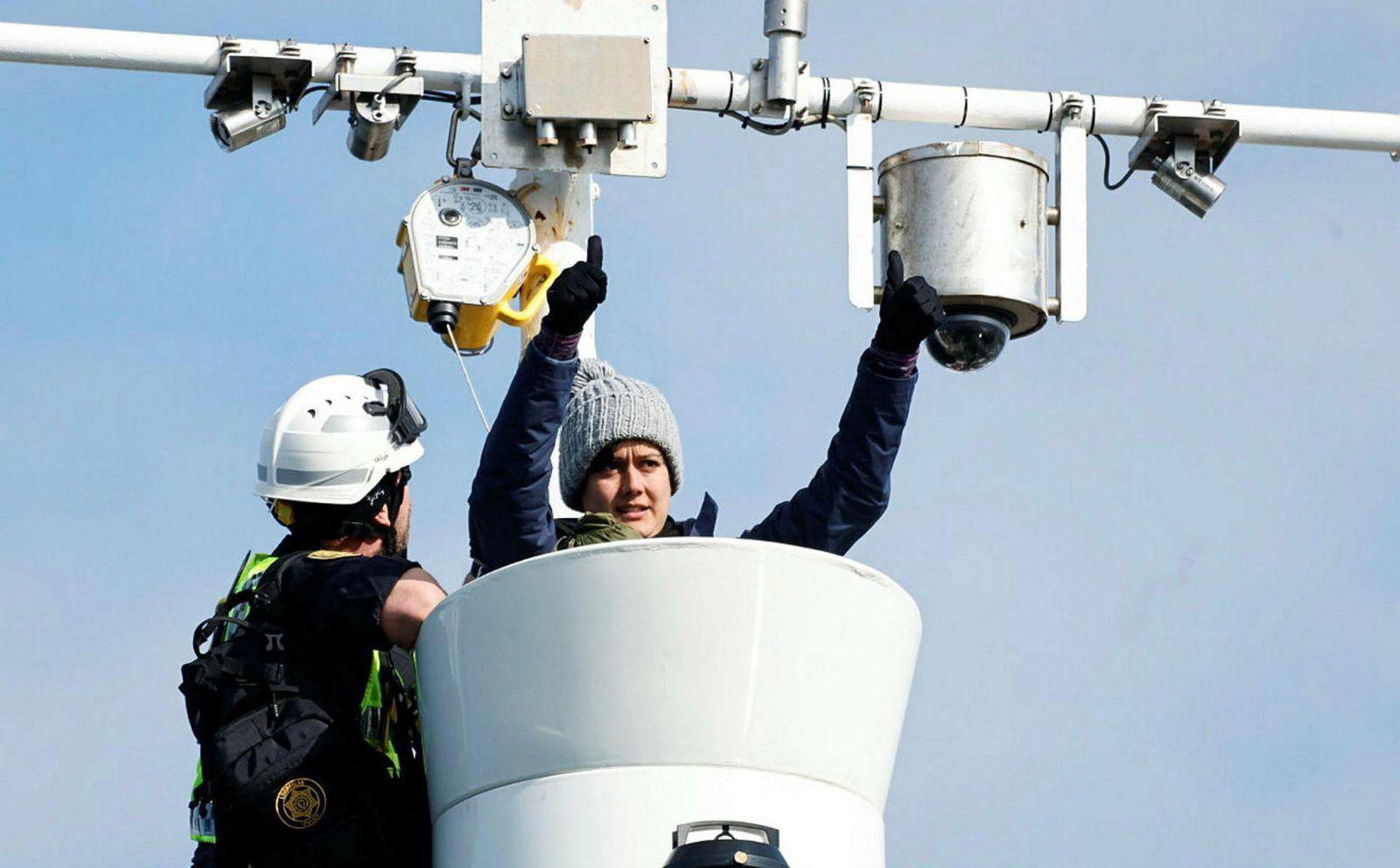
By dawn, the two women were installed in the crow’s nests of H8 and H9, the only active fin whaling vessels left in the North Atlantic. Below them, coiled ropes and fenders. Empty brackets where the harpoons would be mounted. The ships of Hvalur hf., Iceland’s sole remaining whaling company, were scheduled to depart that morning for the hunting grounds. They would not leave for another thirty-three hours.
This is a story about two activists who said the system was broken. About the secret recordings that proved they were right. And about what it means when a state prosecutes the people who exposed the corruption rather than the people who committed it.
On 22 January 2026, Babaei and Phillips will stand trial in Iceland on charges of trespassing and failing to follow police orders. The maximum penalty is unclear, but the message is not: climb a mast to stop a hunt that your own government’s ethics board has deemed unlawful, and you may face criminal consequences. Secure a whaling licence through alleged backroom deals with the Prime Minister, and you face nothing at all.
The Contradiction
To understand why two women would spend thirty-three hours in the freezing North Atlantic wind, without adequate food, water, or warm clothing, you have to understand what they had already tried.
Phillips had spent two hunting seasons on a cold, blustery cliffside above Iceland’s last whaling station, logging each fin whale brought back by the Hvalur fleet. The butchering of a single animal takes between four and eight hours, depending on the skill of the whalers. If the whale is female, the monitors wait until the workers cut her open to see if she was carrying a calf.
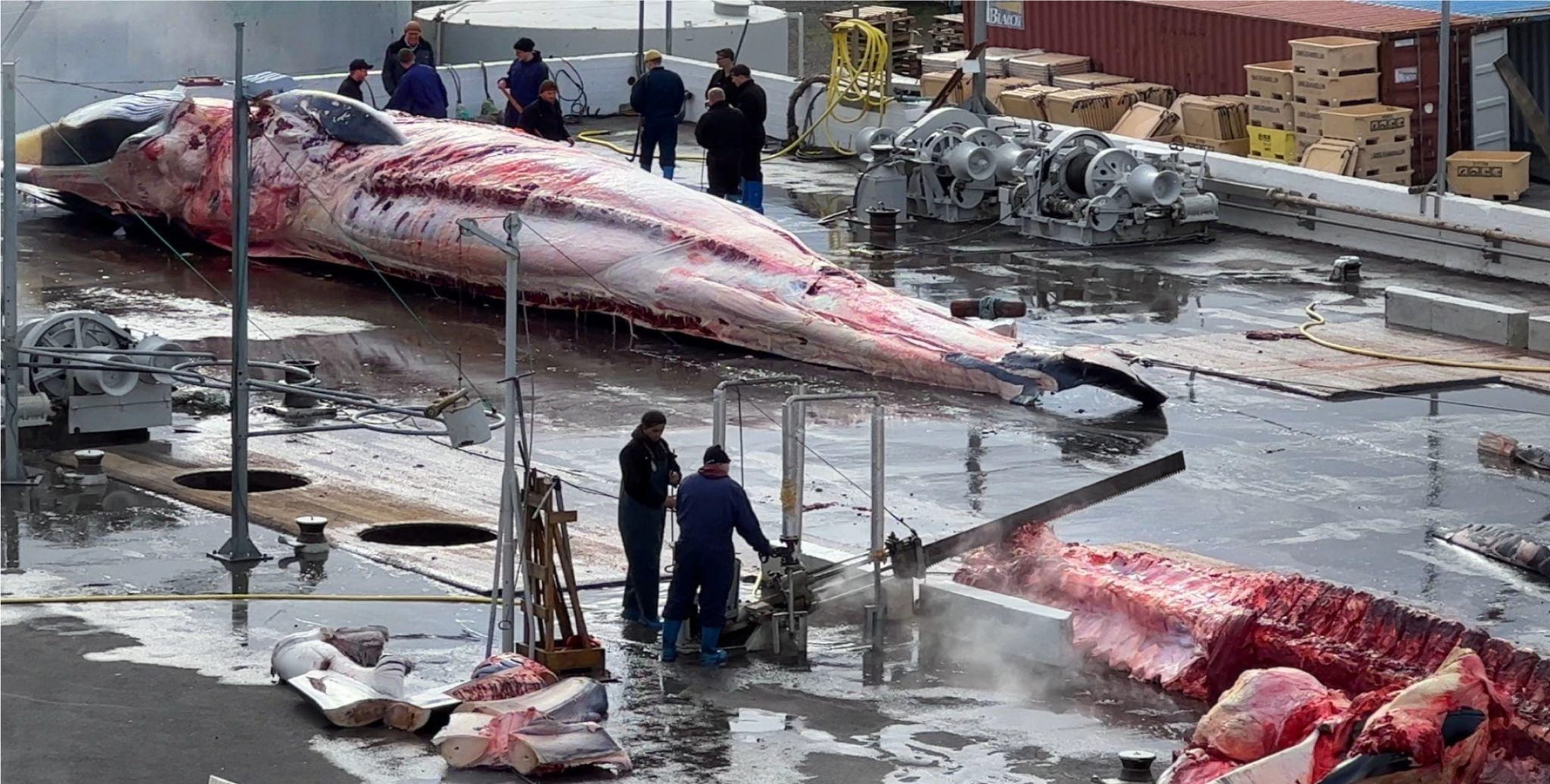
‘I’ve never seen a fin whale alive,’ Phillips told me. ‘But I’ve documented countless dead.’
What stays with her is not the images. It’s the smell. When she arrived at the station, another volunteer handed her a pot of Vicks VapoRub to plug her nostrils. It didn’t work. ‘It’s a thick, sweet smell that permeates your clothes, your hair, and fills your nostrils,’ she said.
The documentation was meticulous. The advocacy was relentless. International and local NGOs, artists, writers, the global public, a majority of Icelanders, and even Iceland’s own politicians aligned on a single point: fin whaling had no place in a modern democracy. In 2023, the Icelandic Food and Veterinary Authority released a report that should have ended the debate entirely.
The findings were damning. Forty per cent of the hunted fin whales struggled for approximately eleven and a half minutes before they died. Two took more than an hour. One whale fought for two hours. The Authority concluded that the methods used in fin whale hunting violate Iceland’s own animal welfare laws, which are among the strongest in the world.
June 2023
Fisheries Minister Svandís Svavarsdóttir suspended the hunt.
I was in Reykjavik when it happened. I remember shaking her hand, feeling like something had finally shifted. For years, the coalition of activists, scientists, politicians, and ordinary Icelanders had pushed against a wall. Now the wall had cracked. It felt, for a moment, like victory.
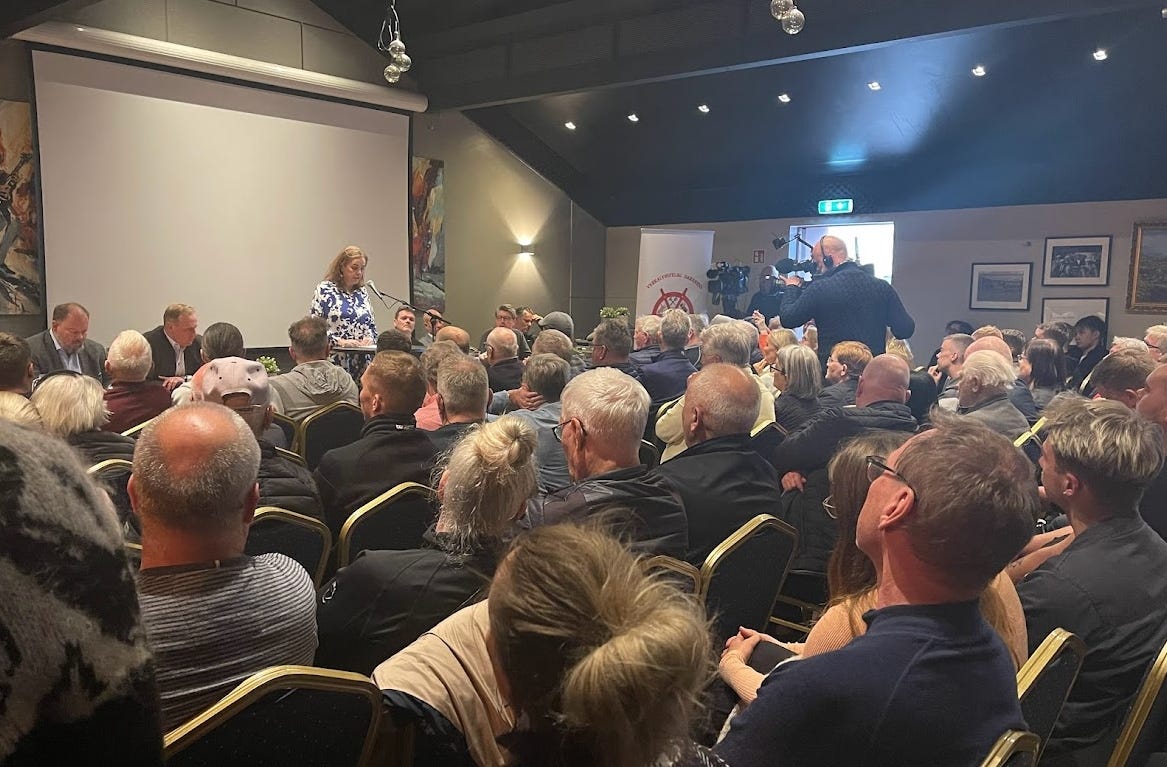
But Kristján Loftsson, the CEO and principal owner of Hvalur hf., applied pressure. The ban was lifted. In the shortened season that followed, Hvalur killed twenty-five fin whales including a full term calf inside a pregnant female.
‘This was a sucker punch to the gut,’ Phillips said. ‘Anahita and I met protesting this decision. We felt there was nothing left but to take this action.’
Babaei framed it in starker terms. ‘When the state authorises the continuation of something its own authorities have deemed unlawful, the usual pathways for accountability collapse. There is no petition, no meeting, no legal complaint left that can correct that contradiction. In that context, civil disobedience is not a choice. It becomes the only constitutional tool still available.’
Thirty-Three Hours
From the crow’s nests, the cold bit harder with every hour without water, warm clothes, or a phone. Smoke from a neighbouring vessel made them dizzy. They could hear each other only about forty per cent of the time, shouting across the wind or using hand signals when their voices failed.
‘We barely knew each other before that morning,’ Babaei said. ‘But those hours made us sisters.’
They agreed on one thing early: whatever happened, they would go down together.
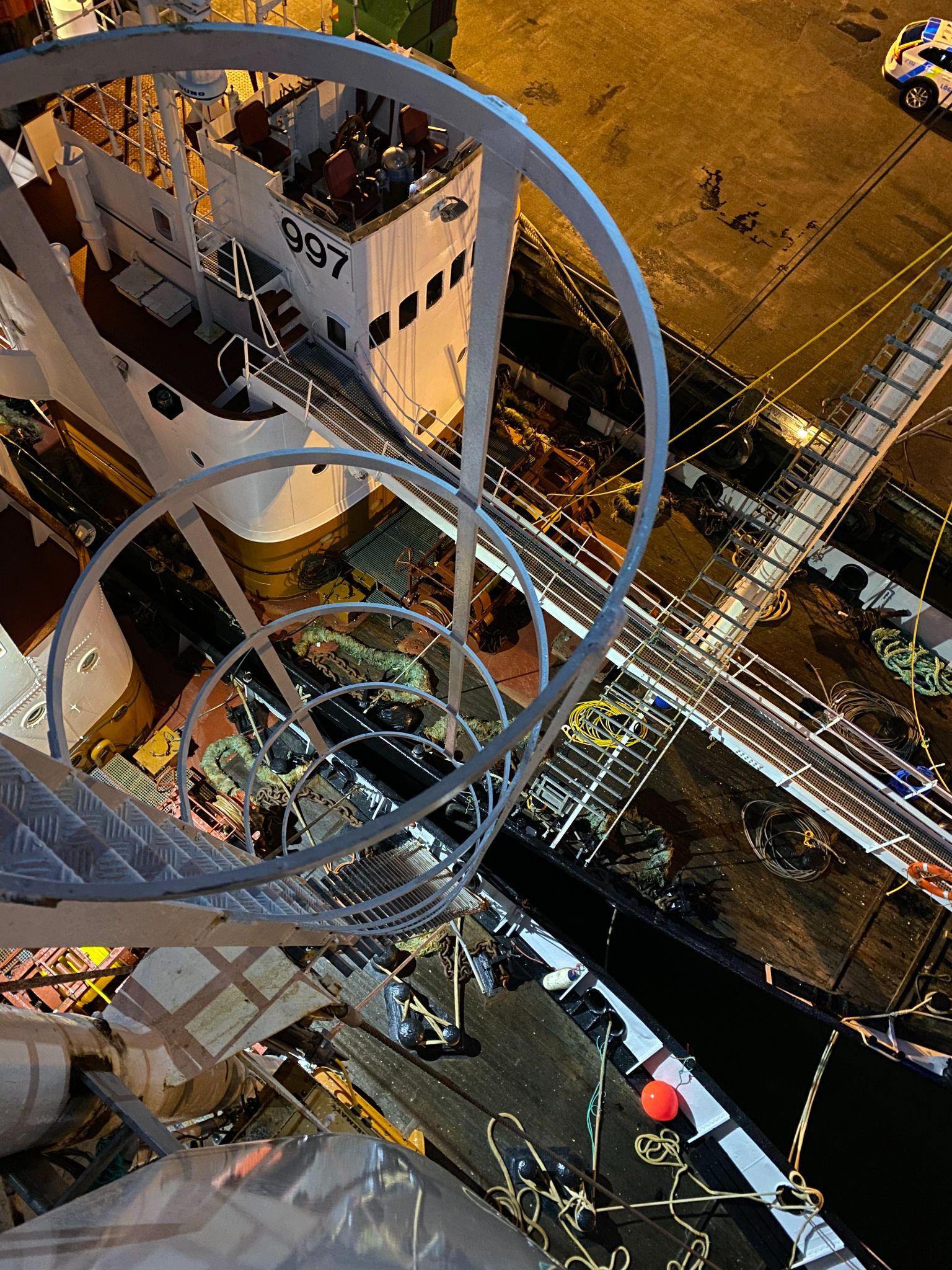
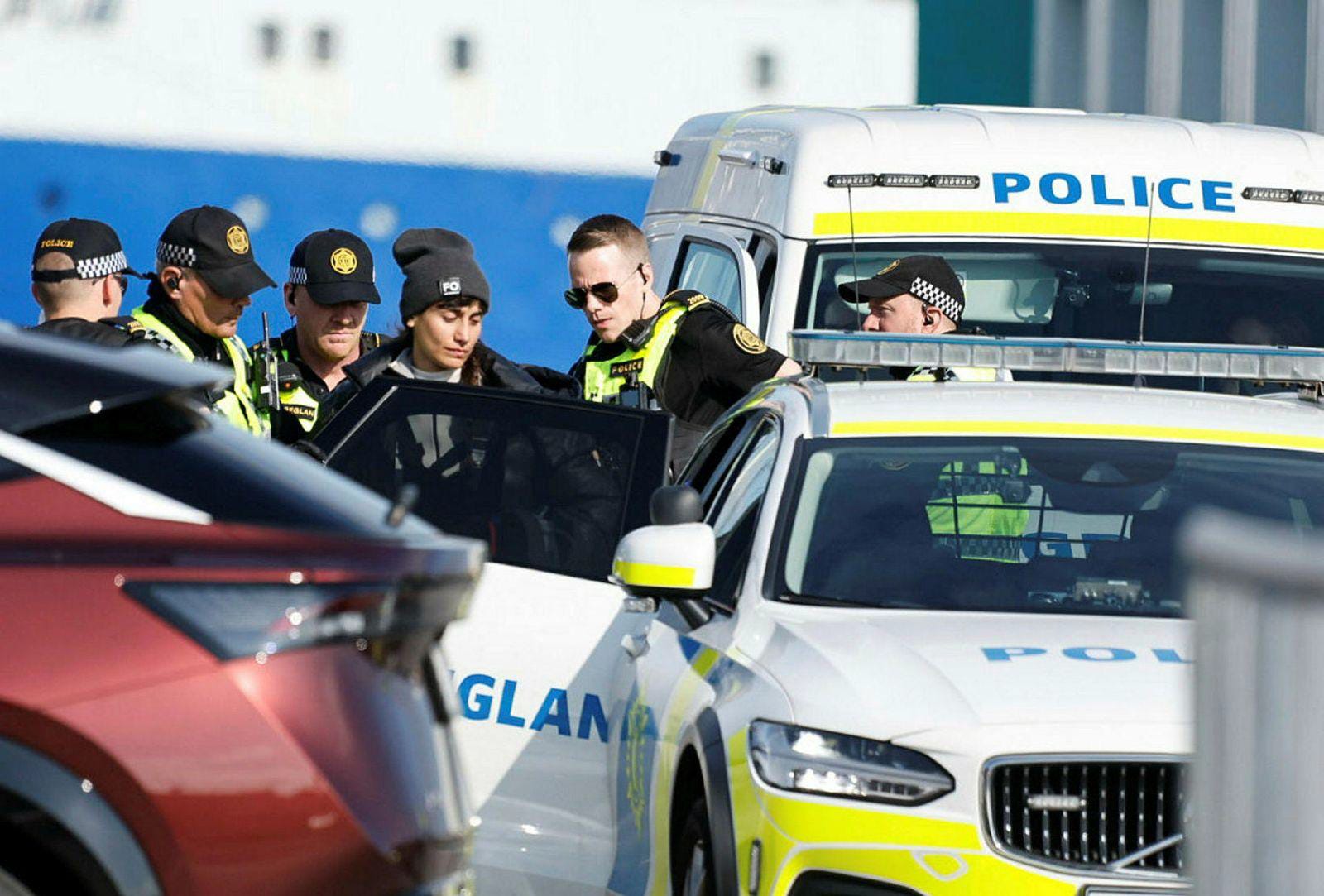
The police confiscated Babaei’s food, water, and medicine almost immediately. When they tried to remove her from her barrel by force, they cut her lip. Phillips, still in her own crow’s nest, watched and could do nothing. She spent the remaining hours feeling guilty that she still had sips of water and cereal bars. At one point, she tried to throw snacks across to Babaei. She missed. The attempt was captured on a livestream that Icelandic television broadcast continuously throughout the occupation.
The response from the public was extraordinary. People came to the harbour with food, water, and supplies, which the police confiscated. Someone tried to order supplies for Babaei via drone. The delivery platform Aha had to issue a public service announcement: their website had crashed, and they couldn’t deliver anyway because the ships were under the flight path. A small crowd stayed through the night, playing the activists’ favourite songs into the darkness through a sound system. Someone read messages of support from their families. A swimmer braved the freezing harbour to shout encouragement up to them. On a small boat nearby, a pro-whaling protester held a sign telling them to go home.
Phillips watched two sunrises from her perch. ‘It was very peaceful up there,’ she said. ‘Once the fire engines and sirens whirred away, it was calm and quiet.’
The hardest moment came not during the occupation, but at the end of it. After thirty-three hours, their bodies gave out. They climbed down.
‘That was the first time we truly broke,’ Babaei said. ‘I understood that there was nothing left I could do to stop the hunts from restarting the next morning. It felt like watching the door close on the whales we had tried so hard to protect. I remember shouting, “I’m sorry I couldn’t stay longer.” My only regret is that I didn’t have more strength in my body to resist for even one more hour.’
The Bones
The first time I saw Anahita Babaei, she was dancing.
It was the summer of 2023, in Reykjavik harbour. Whale bones had been laid on the dock next to H8 and H9, the ships that had killed them. She was performing yes, but she was also mourning.
I watched and filmed from a distance. I didn’t know her name yet, but I knew, in that moment, what kind of person she was. The dedication. The refusal to look away.
Later, we walked through the city together, carrying the bones through the streets in a quiet procession. They were heavy and awkward to hold. People stopped to watch us pass. Some nodded. Some looked away.
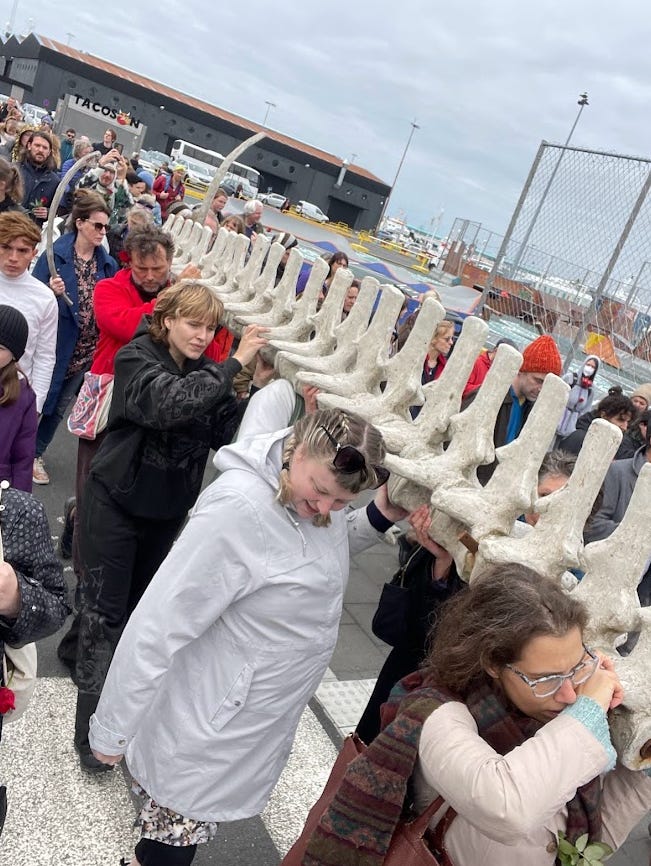
Everyone was sombre. Respectful. There was a sadness to it, but underpinned with resolve. Nobody spoke much. We didn’t need to. The bones said enough.
That is who Anahita Babaei is. That is who Elissa Phillips is. They are not people who can look away.
October 2024
In a hotel restaurant in Reykjavik, a man who called himself a Swiss investor was recording everything.
Across the table sat Gunnar Bergmann, a real estate agent, former chairman of the Minke Whalers’ Association, and son of Jón Gunnarsson, a member of parliament for Iceland’s Independence Party. Bergmann thought he was courting a wealthy client. The man was reportedly working for Black Cube, the private intelligence firm staffed by former Mossad operatives, allegedly hired by an international environmental organisation.
What Bergmann said on those recordings was explosive.
According to the Icelandic news outlet Heimildin, which first reported on the recordings in November 2024, Bergmann described how his father had made a deal with Prime Minister Bjarni Benediktsson. Jón Gunnarsson would accept the fifth spot on the Independence Party’s candidate list in the Southwest constituency, a position virtually guaranteed to cost him his parliamentary seat. In exchange, he would receive a position at the Ministry of Food, Agriculture, and Fisheries. His task: secure a whaling licence for Kristján Loftsson, CEO of Hvalur hf. and a close personal friend of the elder Gunnarsson.
‘You don’t get to meet Kristján and become a good friend of his after one or two meetings,’ Bergmann reportedly said on the recording. ‘It took Jón and Kristján many years to become good friends. But when you’re in, you’re definitely in.’
On 25 October 2024, Jón Gunnarsson was appointed as the Prime Minister’s special representative at the Ministry. On 7 November, after media inquiries about the recordings, Benediktsson announced that Gunnarsson would be removed from any responsibilities related to whaling licences. A parliamentary committee launched an investigation, demanding all correspondence related to the appointment.
None of it mattered.
On 5 December 2024, with the scandal still burning, Bjarni Benediktsson issued a new five-year whaling licence to Hvalur hf., authorising the killing of up to 209 fin whales annually through 2029. A second licence was granted to another company for minke whales. The Prime Minister was operating as head of a caretaker government following the collapse of his coalition. Major policy decisions are not traditionally taken in such circumstances. He took this one anyway.
The activists had claimed the system was corrupt. Secret recordings suggested they were right. The licence was issued regardless. Now the whistleblowers face trial. The alleged dealmakers do not.
The Species
Fin whales are the second-largest animals ever to have existed. They can live for nearly a century. When they dive to feed and rise to breathe, they carry nutrients from the deep ocean to the surface, fertilising the waters that sustain entire marine ecosystems. Scientists are only beginning to map how much the North Atlantic depends on their presence.
The International Union for Conservation of Nature (IUCN) classifies fin whales as Vulnerable globally, meaning they face a high risk of extinction in the wild. But that global assessment masks significant regional variation. North Atlantic populations, the ones Iceland hunts, remain well below historical levels. They have not fully recovered from twentieth-century industrial whaling, which killed hundreds of thousands of fin whales before the 1986 moratorium. Recovery is slow. Fin whales mature late, reproduce infrequently, and raise calves that take years to reach independence.
There is no viable commercial market for Atlantic fin whale products. Iceland itself does not eat fin whale meat. What Hvalur produces is exported almost exclusively to Japan, where it ends up in vending machines and pet food. Independent audits have shown the operation haemorrhages money. Whale-watching, by contrast, generates sustained revenue and enjoys broad public support.
In 2025, Hvalur did not hunt. Not because of legal restrictions or public pressure, but because Japan has now resumed hunting its own fin whales, reducing demand for Icelandic exports. The boats sat idle. The five-year licence remained in force.
The Hunter
Kristján Loftsson, the man who wants these whales dead, does not need to hunt them. He is one of Iceland’s richest men, having diversified his father’s whaling company into a major investment firm with stakes in banks, fisheries, and IT companies. He inherited the business in 1974 and has spent fifty years refusing to stop.
In interviews, he has called the activists who climbed his masts ‘vagabonds’. He called the minister who suspended the hunt ‘a Stalinist’. When asked about the cruelty of his methods, he claims most whales lose consciousness almost immediately, though his own government’s report found otherwise. He has floated the idea of selling whale deaths as carbon credits, on the grounds that dead whales emit less CO2 than living ones.
When comparisons are made to Captain Ahab, the obsessive hunter in Moby-Dick, Loftsson does not bristle. ‘That’s an honour,’ he told the Guardian in 2023.
He is eighty years old. He shows no sign of stopping. ‘We can carry on for ever,’ he said.
‘It’s simply the vanity project of a rich, hateful man,’ Phillips said of Loftsson’s operation. She is not wrong.
The Trial
The prosecution’s case is simple: trespass. The women boarded private vessels without authorisation.
The defence’s argument is more complex. Babaei and Phillips contend that they were exposing unlawful practices, that Iceland’s own authorities had concluded the hunt violated animal welfare law, and that the permit process itself was compromised. They want the court to examine not just the act of climbing, but the context that made climbing necessary.
‘Civil disobedience is not meant to undermine democracy,’ Babaei said. ‘It is meant to defend it when the system refuses to enforce its own rules.’
The implications extend far beyond Iceland. In the months since their arrest, Babaei and Phillips have spoken at COP29 and UNOC3, the United Nations Ocean Conference. They have worked with Members of the European Parliament, who issued a formal letter warning that renewed whaling could lead to legal action against Iceland for breaching international environmental commitments. Jane Goodall lent her voice to their cause before her death. Jason Momoa has done the same.
Under the Aarhus Convention, to which Iceland is a signatory, environmental defenders are afforded specific protections. The UN Special Rapporteur on Environmental Defenders has warned that criminalising peaceful protest undermines these obligations. By prosecuting Babaei and Phillips, Iceland may be breaching the very frameworks it has pledged to uphold.
A conviction would send a signal to environmental defenders across Europe. In a moment when climate and biodiversity crises demand more civic engagement, not less, criminalising peaceful protest against practices a government’s own experts have deemed unlawful would represent a troubling precedent.
‘Arresting peaceful protesters for an act of civil disobedience sets a dangerous precedent,’ Phillips said. ‘There’s a crackdown happening worldwide. It’s crucial that we protect the right to protest. I know what we did was right.’
Babaei put it differently. ‘The courtroom, even in adversity, becomes a platform to speak for nature and for animals. The immediate verdict may feel like a limitation, but history is the ultimate judge.’
Iceland’s current Minister of Industry and Trade, Hanna Katrín Friðriksson, has said publicly that whaling should end. She argues it fails every measure of sustainability. A bill to ban the practice was supposed to reach parliament this session. It hasn’t. The minister now talks about autumn 2026.
Meanwhile, the five-year licence sits in a government filing cabinet, valid through 2029. Whether anyone will cancel it early, and whether Hvalur would be entitled to compensation if they did, are questions nobody in Reykjavik seems eager to answer. Loftsson, now in his eighties, has hunted whales for decades. His company is the last of its kind in the North Atlantic.
Only three nations continue commercial whaling in defiance of the international moratorium: Iceland, Norway, and Japan. The whales themselves, of course, recognise no borders. Fin whales migrate across the North Atlantic, their movements tracing ancient routes that predate human civilisation. They do not belong to Iceland. They do not belong to anyone.
Iceland has signed a memorandum with the European Union pledging to enhance cooperation on ocean protection. It continues to hunt fin whales anyway.
I asked both women what victory would look like.
‘Whatever the decision on 22 January, it is one step,’ Babaei said. ‘A single positive step in the thousands of actions people around the world are taking to build a more compassionate and just society. True victory is in showing that resistance matters, that citizens can hold power accountable, and that the fight to protect life continues.’
Phillips was more direct. ‘Victory will be when commercial whaling is truly ended for good. Not just in Iceland, but globally.’
I think about the fin whale I watched off the coast of Reykjavik. The way it surfaced without urgency, breathed, and slipped back under. It didn’t know about the ships in the harbour. It didn’t know about the trial, or the recordings, or the men trading favours in government buildings. It didn’t know that two women climbed frozen masts in the dark for it.
The whale knew only the rhythm of the sea. The deep dive. The slow ascent. The breath.
Somewhere in the North Atlantic, it is still swimming. So are others. I refuse to believe we will let them die for one man’s vanity and another man’s corruption.
Even one whale.
Update, 16 February 2026
Today, the Reykjavik District Court convicted Anahita Babaei and Elissa Phillips on both counts: trespassing and failure to comply with police orders. Each was fined 200,000 Icelandic kronur, approximately £1,200. They were also ordered to pay all legal costs, a sum likely to exceed £25,000.
The Maritime Security Act charges, which carried the heaviest potential penalties, had been dropped earlier in the proceedings after the defence argued the act does not apply to whaling vessels docked in Reykjavik harbour.
Katrín Oddsdóttir, the women’s defence lawyer, said the verdict effectively nullifies the right to protest. ‘They were fined for climbing up there that day, even though it is clear that there was no harm from this conduct,’ she said. She is considering an appeal.
Kristján Loftsson, CEO of Hvalur hf., has stated that the prosecution was intended to deter others from taking similar action.
Babaei, who was present for the sentencing, said the outcome did not surprise her. ‘Civil disobedience is never judged correctly by the judiciary of its time,’ she said. ‘It gets its honour restored in the rearview mirror of history. This is a sad day for democracy, for the right to protest, and for the whales.’
She noted that yesterday was International Whale Day. Today, they were convicted for defending them.
The five-year whaling licence remains in force through 2029. The promised bill to ban whaling has still not reached parliament. Hvalur’s ships sat idle for a second consecutive season in 2025, not because of legal protection or public pressure, but because the Japanese market no longer wants the product.
The women who climbed the masts were convicted. The alleged backroom deals that secured the licence have faced no legal consequences. The system Babaei and Phillips said was broken remains exactly as they described it.
You can support Anahita and Elissa’s fundraiser to cover the cost of their legal defence here.
Thank you
A well told tale capturing a deeply seeded controversy and hypocrisy. Thanks for shedding light on whaling practices in Iceland & beyond.