


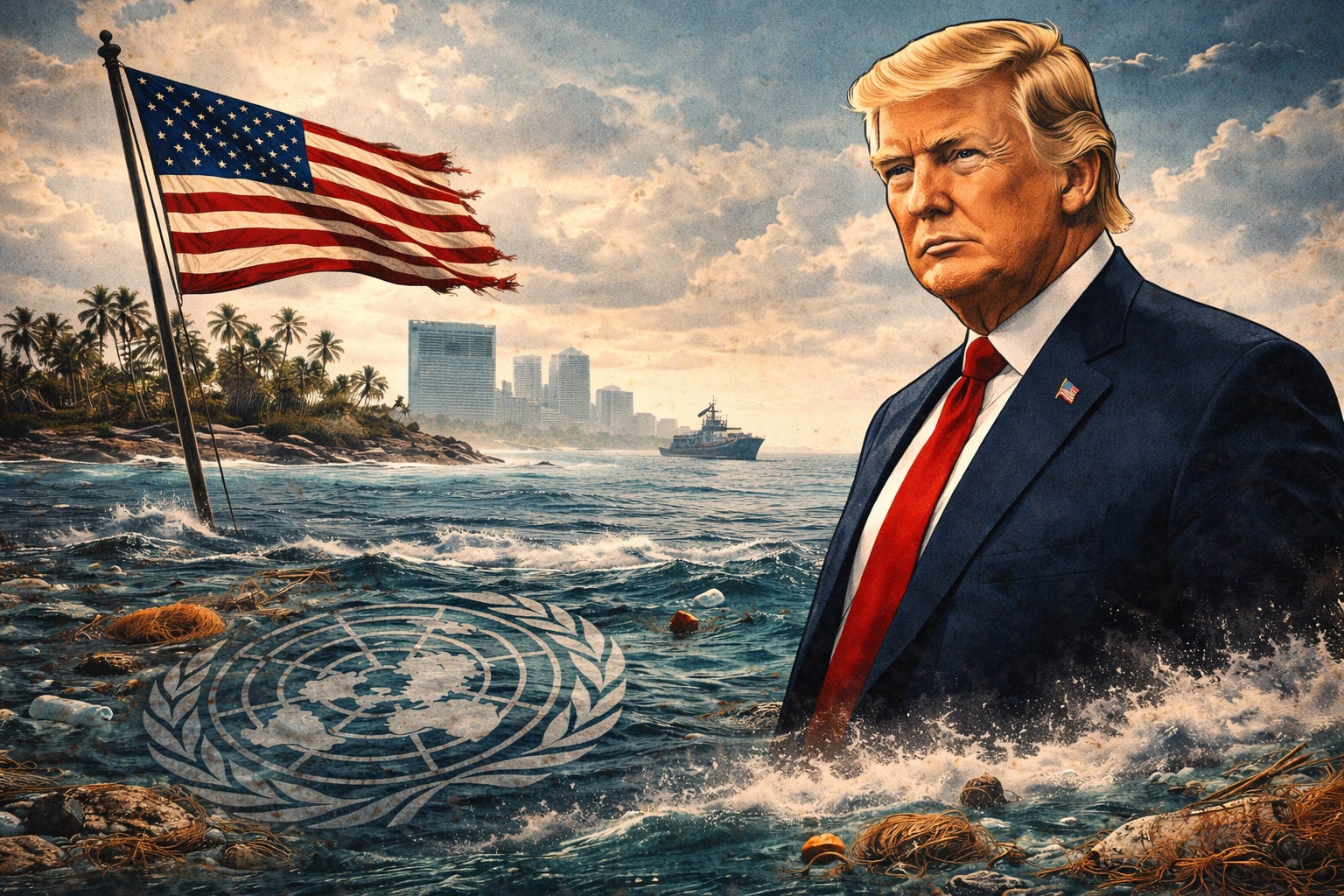
A 7 January White House memo directs the US to withdraw from 66 international organisations. Buried in that list are three bodies that matter for ocean protection.
Why this matters beyond climate
Most headlines focus on climate agreements. Fewer people noticed the US is also leaving the groups that coordinate ocean policy and track which species are going extinct.
That matters because the ocean regulates climate, feeds billions of people, and supports ecosystems we depend on. Coordination failures in the ocean don’t stay abstract for long.
Three withdrawals that matter
1. UN Oceans
This is the UN group that gets different agencies talking to each other about ocean issues: pollution, coastal protection, and rules for deep-sea mining. Without coordination, you get contradictory policies and gaps where no one takes responsibility.
The US has now said it is stepping away from that table.
2. The IUCN (International Union for Conservation of Nature)
The IUCN maintains the Red List, the global system that tracks which species are endangered, vulnerable, or extinct. Governments use it when deciding which animals to protect, which trade to restrict, and which habitats to prioritise.
Leaving the IUCN means less American input into that science, and less influence over how extinction risk is assessed worldwide.
3. SPREP (Secretariat of the Pacific Regional Environment Programme)
SPREP supports Pacific island nations on environmental programmes in the region most exposed to rising seas and reef collapse. Some members are US territories, like Guam, or close military partners, like the Marshall Islands.
Walking away from SPREP while claiming to care about Pacific security sends a mixed signal.
What’s still in
The US did not leave everything. It remains in:
The International Maritime Organization (shipping rules)
The International Whaling Commission
CITES, the treaty controlling international wildlife trade
The withdrawals focus heavily on climate and environmental cooperation.
The legal question
Some exits are straightforward. Others involve treaties the US Senate formally approved decades ago, including the UN climate treaty. Whether a president can withdraw from those unilaterally is legally contested, and court challenges are possible.
What happens now
These international bodies will keep working. The difference is they will do so with less US participation, funding, and influence over the rules.
I’ll be investigating what these withdrawals mean for specific marine protections, including the High Seas Treaty the US signed but never ratified, in the coming weeks. Subscribe to follow that reporting.
This isn’t disengagement from the system, it’s removal of the coordination layer. The physical processes continue → the ability to see and steer them degrades.